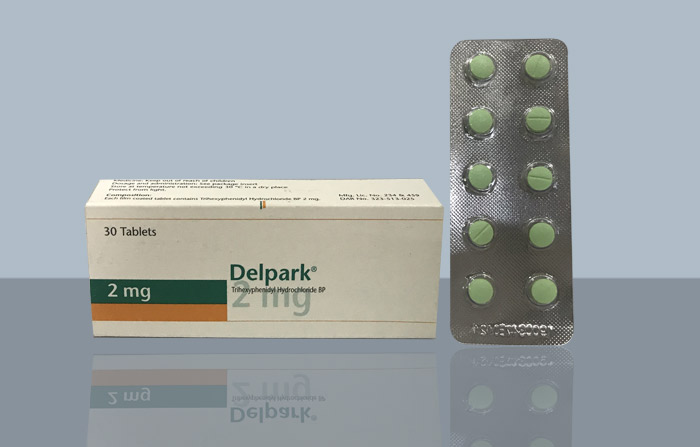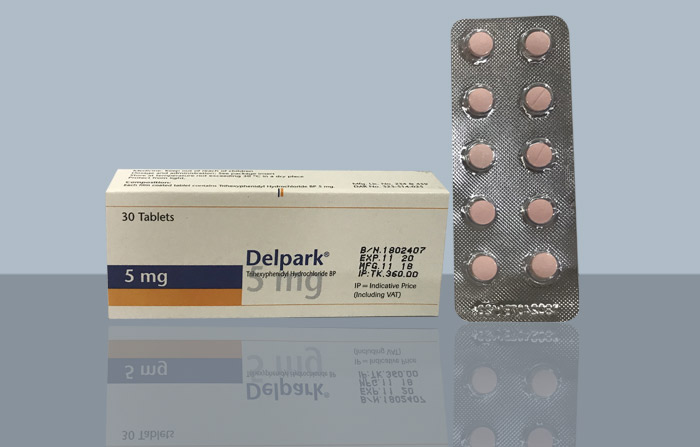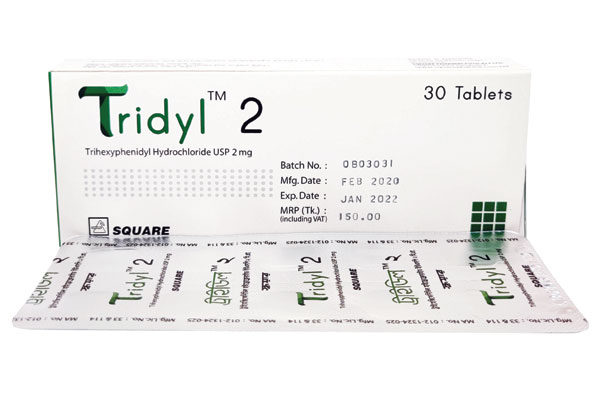

Indications - Trihexyphenidyl Hydrochloride is indicated as an adjunct treatment of all forms of parkinsonism (postencephalitic, arteriosclerotic & idiopathic). Additionally, it is indicated for the control of extrapyramidal disorders caused by central nervous system drugs such as dibenzoxazepines, phenothiazines, thioxanthenes & butyrophenones.
Dosage & Administration - Dosage should be individualized. The initial dose should be low and then increased gradually, especially in patients over 60 years of age. Whether Trihexyphenidyl may best be given before or after meals should be determined by the way the patient reacts. Idiopathic Parkinsonism: 1 mg of Trihexyphenidyl may be administered the first day. The dose may then be increased by 2mg increments at intervals of three to five days. Drug-Induced Parkinsonism: Commence therapy with a single 1 mg dose increase the total daily dosage to 5-15 mg range if the extrapyramidal manifestations are not controlled. Concomitant Use with Levodopa: When Trihexyphenidyl is used concomitantly with levodopa, the usual dose is 3-6 mg daily.
Side Effects - Minor side effects such as dryness of the mouth, blurring of vision, dizziness, mild nausea or nervousness. Patients with arteriosclerosis or with a history of idiosyncrasy to other drugs may exhibit reactions of mental confusion, agitation, disturbed behavior, or nausea and vomiting. Potential side effects are constipation, drowsiness, urinary hesitancy or retention, pupil dilation, increased intraocular tension, vomiting and headache.
Contraindications - Contraindicated in patients with hypersensitivity to Trihexyphenidyl HCI or to any of the tablet or elixir ingredients. Trihexyphenidyl is also contraindicated in patients with narrow angle glaucoma. Blindness after long-term use due to narrow angle glaucoma has been reported.
Others - Pregnancy & Lactation Pregnancy Category C. It is not known whether the drug is excreted in human milk and therefore Trihexyphenidyl should only be used if the expected benefit to the mother outweighs the potential risk to the infant.
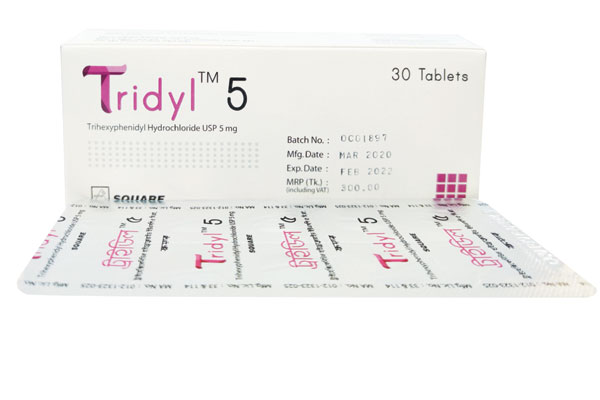
Tablet Tridyl 5 mg
- Brand Name - Tridyl 5 Tablet
- Generic Name - Trihexyphenidyl Hydrochloride
- Doges From - Tablet
- Strength - 5 mg
- Pack Size - 30s
- Manufacture - Square Pharmaceutical Ltd.
Customers who bought this item also bought