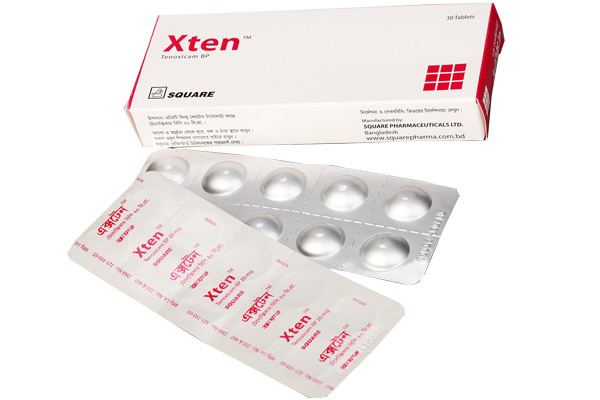

Indications - Tenoxicam is indicated for the symptomatic treatment of the following painful inflammatory and degenerative disorders of the musculoskeletal system: Rheumatoid arthritis. Osteoarthritis. Arthrosis. Ankylosing spondylitis. Extra-articular disorders, e.g. tendinitis, bursitis, periarthritis of the shoulders (shoulder-hand syndrome) or hips, strains, and sprains. Acute gout.
Dosage & Administration - Dosage Standard dosage: For all indications except acute gout, a daily dosage of 20 mg should be given at the same time of day. In acute attacks of gout: The recommended dose for acute attacks of gout is 40 mg once daily for two days followed by 20 mg once daily for a further five days. In the treatment of chronic disorders: The therapeutic effect of tenoxicam is evident early in treatment but there is a progressive increase in response over time. In chronic disorders, daily doses higher than 20 mg should be avoided since this would increase the frequency and intensity of unwanted reactions without significantly increasing efficacy. For patients needing long-term treatment, a reduction to a daily oral dose of 10 mg may be tried for maintenance. Special dosage instructions: In principle, the above dosage recommendations also apply to elderly patients and to patients suffering from kidney or liver disease. Because of lack of clinical experience, no dosage recommendations have so far been established for children and adolescents. Administration The tablets should be taken with a glass of water. It is preferable to take this medicine during or immediately after a meal.
Side Effects - Based on clinical trials including large numbers of patients, Tenoxicam proved to be well tolerated in the recommended dose. Usually, the undesirable effects reported were mild and transient. In a small proportion of patients, the interruption of treatment due to undesirable effects was necessary. Local tolerance of Tenoxicam given parenterally was good. The following undesirable effects have been reported: Frequency is greater than 1%- Gastrointestinal tract: gastric, epigastric and abdominal discomfort, dyspepsia, heartburn, nausea. Central nervous system: dizziness, headache. Frequency less than 1%- Gastrointestinal tract: constipation, diarrhea, stomatitis, gastritis, vomiting, ulcers, Gl-bleeding including hematemesis and melena. Central nervous system: fatigue, sleep disturbances, appetite loss, dry mouth, vertigo. Skin: itching (also in the anal region after rectal administration), erythema, exanthema, rash, urticaria. Urinary tract and kidneys: increase in BUN or creatinine, edema. Liver and biliary tract: increased liver enzyme activity. Cardiovascular system: palpitations. Isolated cases (frequency less than 0.01%)- Gastrointestinal tract: Gl-perforation. Central nervous system: visual disturbances. Skin: Stevens-Johnson and Lyell's syndrome, photosensitivity reaction, vasculitis. Blood: anemia, agranulocytosis, leukopenia, thrombocytopenia. Hypersensitivity reactions: dyspnea, asthma, anaphylaxis, angioedema. Cardiovascular system: elevated blood pressure, mainly in patients treated with cardiovascular drugs. Liver/Biliary tract: hepatitis.
Contraindications - Tenoxicam must not be administered to patients: known to be hypersensitive to the drug; in whom salicylates or other non-steroidal anti-inflammatory drugs (NSAIDs) induce symptoms of asthma, rhinitis, or urticaria; suffering or having suffered from the disease of the upper gastrointestinal tract, such as gastritis, gastric and duodenal ulcer.
Others - Pregnancy & Lactation NSAIDs have an inhibitory effect on prostaglandin synthesis and, when given during late pregnancy, may cause the closure of the fetal ductus arteriosus, prolong labor and delay parturition. Treatment during the third trimester of pregnancy should be avoided. Based on findings from single-dose administration, a very small amount (approximately 0.2%) of tenoxicam passes into breast milk. There is no evidence of adverse reactions in breast-fed infants of mothers taking Tenoxicam. Nevertheless, infants should be weaned or the drug discontinued.

Mobicam Tablet
- Brand Name - Mobicam Tablet
- Generic Name - Tenoxicam
- Doges From - Tablet
- Strength - 20 mg
- Pack Size - 30s
- Manufacture - Beximco Pharmaceuticals Ltd