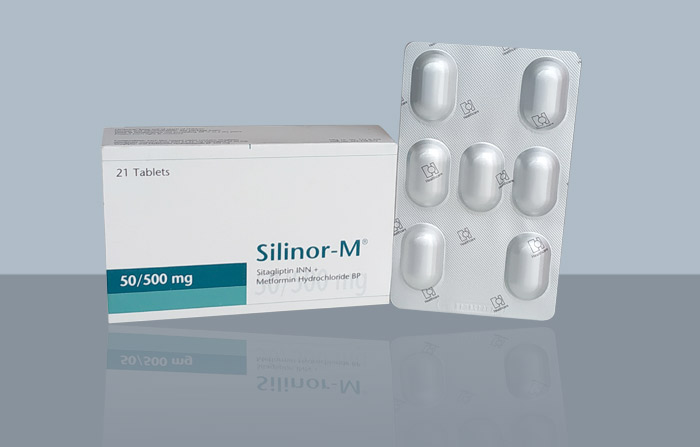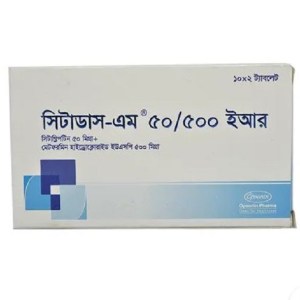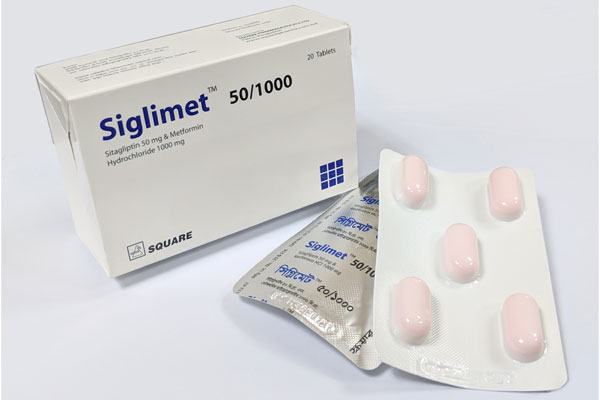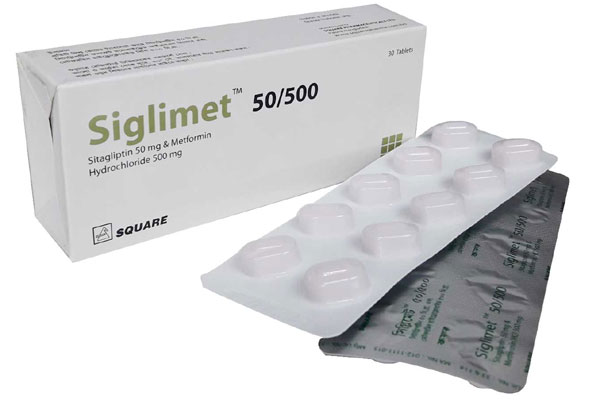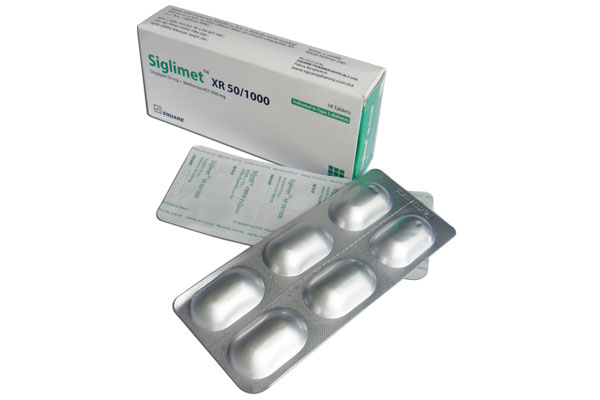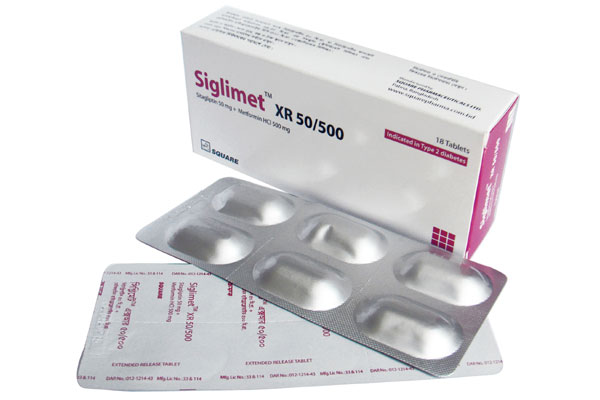

Indications - This is indicated as an adjunct to diet and exercise to improve glycemic control in adults with type 2 diabetes mellitus when treatment with both sitagliptin and metformin is appropriate. Important limitations of use: This should not be used in patients with type 1 diabetes or for the treatment of diabetic ketoacidosis, as it would not be efective in these settings. This has not been studied in patients with a history of pancreatitis. It is unknown whether patients with a history of pancreatitis are at increased risk for the development of pancreatitis while using This.
Dosage & Administration - Dose of film-coated tablet: The dosage of this tablet should be individualized on the basis of the patient's current regimen, efectiveness, and tolerability while not exceeding the maximum recommended daily dose of 100 mg sitagliptin and 2000 mg metformin. Initial combination therapy or maintenance of combination therapy should be individualized and left to the discretion of the health care provider. This tablet should generally be given twice daily with meals, with gradual dose escalation, to reduce the gastrointestinal (GI) side efects due to metformin. The starting dose of this tablet should be based on the patient’s current regimen. This tablet should be given twice daily with meals. The recommended starting dose in patients not currently treated with metformin is 50 mg sitagliptin/500 mg metformin hydrochloride twice daily, with gradual dose escalation recommended to reduce gastrointestinal side efects associated with metformin. The starting dose in patients already treated with metformin should provide sitagliptin dosed as 50 mg twice daily (100 mg total daily dose) and the dose of metformin already being taken. For patients taking metformin 850 mg twice daily, the recommended starting dose of this tablet is 50 mg sitagliptin/1000 mg metformin hydrochloride twice daily. No studies have been performed specifcally examining the safety and efcacy of Sitagliptin Phosphate Monohydrate INN/Metformin Hydrochloride BP in patients previously treated with other oral antihyperglycemic agents and switched to Sitagliptin Phosphate Monohydrate INN/Metformin Hydrochloride BP. Any change in therapy of type 2 diabetes should be undertaken with care and appropriate monitoring as changes in glycemic control can occur. Dose of extended-release tablet: Administer once daily with a meal preferably in the evening. Gradually escalate the dose to reduce the gastrointestinal side effects due to Metformin. May adjust the dosing based on effectiveness and tolerability while not exceeding the maximum recommended daily dose of 100 mg Sitagliptin and 2000 mg Metformin extended-release. Maintain the same total daily dose of Sitagliptin and Metformin when changing between film-coated tablet and extended-release tablet, without exceeding the maximum recommended daily dose of 2000 mg Metformin extended-release. Patients using two extended-release tablets (such as two 50/500 or two 50/1000 tablets) should take the two tablets together once daily. The 100 mg Sitagliptin/1000 mg Metformin HCI extended-release tablet should be taken as a single tablet once daily. Patients treated with an insulin secretagogue or insulin: Co-administration of the combination with an insulin secretagogue (e.g., sulfonylurea) or insulin may require lower doses of the insulin secretagogue or insulin to reduce the risk of hypoglycemia.
Side Effects - The most common adverse reactions reported in ≥5% of patients simultaneously started on sitagliptin and metformin and more commonly than in patients treated with placebo were diarrhea, upper respiratory tract infection, and headache. Adverse reactions reported in ≥5% of patients treated with sitagliptin in combination with sulfonylurea and metformin and more commonly than in patients treated with placebo in combination with sulfonylurea and metformin were hypoglycemia and headache. Hypoglycemia was the only adverse reaction reported in ≥5% of patients treated with sitagliptin in combination with insulin and metformin and more commonly than in patients treated with placebo in combination with insulin and metformin. Nasopharyngitis was the only adverse reaction reported in ≥5% of patients treated with sitagliptin monotherapy and more commonly than in patients given placebo. The most common (>5%) adverse reactions due to initiation of metformin therapy are diarrhea, nausea/vomiting, fatulence, abdominal discomfort, indigestion, asthenia, and headache.
Contraindications - This tablet is contraindicated in patients with: Renal disease or renal dysfunction, e.g., as suggested by serum creatinine levels ≥1.5 mg/dL [males], ≥1.4 mg/dL [females] or abnormal creatinine clearance which may also result from conditions such as cardiovascular collapse (shock), acute myocardial infarction, and septicemia Acute or chronic metabolic acidosis, including diabetic ketoacidosis, with or without coma. History of a serious hypersensitivity reaction to this tablet or sitagliptin, such as anaphylaxis or angioedema. This tablet should be temporarily discontinued in patients undergoing radiologic studies involving intravascular administration of iodinated contrast materials, because use of such products may result in acute alteration of renal function.
Others - Pregnancy & Lactation Pregnancy Category B. There are no adequate and well-controlled studies in pregnant women with Sitagliptin Phosphate Monohydrate INN/Metformin Hydrochloride BP or its individual components; therefore, the safety of Sitagliptin Phosphate Monohydrate INN/Metformin Hydrochloride BP in pregnant women is not known. This tablet should be used during pregnancy only if clearly needed. It is not known whether sitagliptin is excreted in human milk. Because many drugs are excreted in human milk, caution should be exercised when this tablet is administered to a nursing woman.
Incrit-M 50/1000 Tablet
- Brand Name - Incrit-M 50/1000 Tablet
- Generic Name - Sitagliptin + Metformin Hydrochloride
- Doges From - Tablet
- Strength - 50 mg+1000 mg
- Pack Size - 30s
- Manufacture - Sanofi Bangladesh Ltd.
Customers who bought this item also bought