
Indications - Carbetocin is indicated for the prevention of uterine atony and postpartum haemorrhage (excessive bleeding) following delivery of the infant by elective caesarean section under epidural or spinal anaesthesia.
Dosage & Administration - A single intravenous dose of 100 mcg of carbetocin injection is administered by bolus injection, slowly over 1 minute, only when infant delivery has been completed by caesarean section under epidural or spinal anaesthesia. carbetocin is to be used as a single dose only.
Side Effects - 10-40% of patients experienced nausea, vomiting, abdominal pain, itching skin, increased body temperature, trembling and weakness. Infrequent adverse events (1-5% of patients) included back pain, dizziness, metallic taste, anaemia, sweating, chest pain, dyspnoea, chills, tachycardia and anxiety.
Contraindications - Because of its long duration of action relative to oxytocin, uterine contractions produced by carbetocin cannot be stopped by simply discontinuing the medication. Therefore, carbetocin should not be administered prior to delivery of the infant for any reason, including elective or medical induction of labour. Inappropriate use of carbetocin during pregnancy could theoretically mimic the symptoms of oxytocin overdosage, including hyperstimulation of the uterus with strong (hypertonic) or prolonged (tetanic) contractions, tumultuous labour, uterine rupture, cervical and vaginal lacerations, postpartum haemorrhage, utero-placental hypoperfusion and variable deceleration of foetal heart, foetal hypoxia, hypercapnia, or death. Carbetocin should not be used in patients with a history of hypersensitivity to oxytocin or carbetocin. Carbetocin should not be used in patients with cardio vascular disease, especially coronary artery disease, valvular heart disease, cardiomyopathy and heart failure. Carbetocin is not intended for use in children.
Others - Pregnancy & Lactation Use of carbetocin injection is contraindicated during pregnancy. Small amounts of carbetocin has been shown to cross over from plasma into the breast milk of nursing women. The small amount of carbetocin ingested by infant would not be expected to present a significant safety concern.
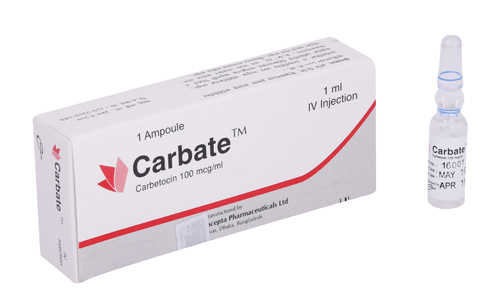
Carbate IV Injection
- Brand Name - Carbate IV Injection
- Generic Name - Carbetocin
- Doges From - Injection
- Strength - 100 mcg
- Pack Size - 1s
- Manufacture - Incepta Pharmaceuticals Ltd.
Customers who bought this item also bought