

Indications - Celecoxib is indicated- For the relief of the signs and symptoms of osteoarthritis. For the relief of the signs and symptoms of rheumatoid arthritis. For the regression and prevention of colorectal adenomatous polyps in patients with familial adenomatous polyposis (FAP).
Dosage & Administration - Osteoarthritis: The recommended oral dose is 200 mg per day administered as a single dose or as 100 mg twice daily. Rheumatoid arthritis: The recommended oral dose is 100 to 200 mg twice daily. Familial adenomatous polyposis (FAP): Usual medical care for FAP patients should be continued while on Celecoxib. To reduce the number of adenomatous colorectal polyps in patients with FAP, the recommended oral dose is 400 mg (2x200 mg capsules) twice daily to be taken with food.
Side Effects - Adverse events occurring in ≥2% of patients at recommended doses - Abdominal pain 4.1%, diarrhoea 5.6%, dyspepsia 8.8%, flatulence 2.2%, nausea 3.5%, back pain 2.8%, peripheral oedema 2.1%, accidental injury 2.9%, dizziness 2.0%, headache 15.8%, insomnia 2.3%, pharyngitis 2.3%, rhinitis 2.0%, sinusitis 5.0%, upper respiratory tract infections 8.1%, rash 2.2%. The following adverse events occurred in 0.1-1.9% of patients- General: Allergy aggravated, allergic reaction, asthenia, chest pain, oedema generalised, face oedema, fatigue, fever, hot flushes, influenza like symptoms, pain, peripheral pain. Gastrointestinal: Constipation, diverticulitis, dysphagia, oesophagitis, gastritis, gastroenteritis, gastro-oesophageal reflux disease, haemorrhoids, hiatal hernia, melaena, dry mouth, stomatitis, tenesmus, tooth disorder, vomiting. Cardiovascular: Aggravated hypertension, angina pectoris, coronary artery disease, myocardial infarction. Nervous system: Leg cramps, hypertonia, hypoesthesia, migraine, neuralgia, neuropathy, paresthesia, vertigo. Female reproductive system : Breast fibroadenosis, breast neoplasm, breast pain, dysmenorrhoea, menstrual disorder, menorrhagia, vaginitis. Male reproductive system: Prostatic disorder. Resistance mechanism disorders: Herpes simplex, herpes zoster, bacterial infection, fungal infection, infection of soft tissue, viral infection, moniliasis, moniliasis genital, otitis media. Hearing and vestibular: Deafness, ear abnormality, earache, tinnitus. Heart rate and rhythm: Palpitation, tachycardia. Respiratory: Bronchitis, bronchospasm, bronchospasm aggravated, coughing, dyspnoea, laryngitis, pneumonia. Liver and biliary system: Peptic function abnormal, increased AST and ALT. Musculoskeletal: Arthralgia, arthrosis, accidental fracture, myalgia, neck stiffness, synovitis, tendinitis. Urinary system: Albuminuria, cystitis, dysuria, haematuria, micturition frequency, renal calculus, urinary incontinence, urinary tract infection. Metabolic and nutritional: Blood urea nitrogen (BUN), CPK, creatinine, alkaline phosphatase, are increased. Hypercholesterolaemia, hyperglycaemia, hypokalaemia. Bodyweight is also increased. Psychiatric: Anorexia, anxiety, increased appetite, depression, nervousness, somnolence. Haemic: Anaemia, ecchymosis, epistaxis, thrombocythaemia. Skin and appendages: Alopecia, dermatitis, photosensitivity reaction, pruritus, rash erythematous, rash maculopapular, skin disorder, dry skin, increased sweating, urticaria. Application site disorders: Cellulitis, contact dermatitis, skin nodule. Special senses: Taste perversion. Vision: Blurred vision, cataract, conjunctivitis, eye pain, glaucoma.
Contraindications - Celecoxib is contraindicated in patients with known hypersensitivity to Celecoxib. It should not be given to patients who have demonstrated allergic type reactions to Sulphonamides (Celecoxib contains a sulphonamide side chain). Celecoxib should not be given to patients who have demonstrated asthma, urticaria or allergic type reactions after taking Aspirin or other NSAIDs. Severe, rarely fatal, anaphylactic like reactions to NSAIDs have been reported in such patients.
Others - Pregnancy & Lactation Celecoxib should be used during pregnancy only if the potential benefit justifies the potential risk to fetus. But in late pregnancy Celecoxib should be avoided because it may cause premature closure of ductus arteriosus. It is not known whether Celecoxib is excreted in human milk. Because many drugs are excreted in human milk and because of potential for serious adverse reactions in nursing infants from Celecoxib, a decision should be made whether to discontinue nursing or to discontinue the drug, taking into account the importance of the drug to the mother.
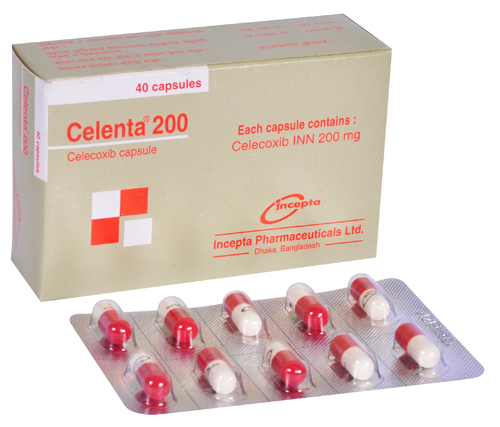
Celenta 200 Capsule
- Brand Name - Celenta 200 Capsule
- Generic Name - Celecoxib
- Doges From - Capsule
- Strength - 200 mg
- Pack Size - 40s
- Manufacture - Incepta Pharmaceuticals Ltd.
Customers who bought this item also bought

