

Indications - Dasatinib is indicated for the treatment of adults with: Newly diagnosed Philadelphia chromosome-positive (Ph+) chronic myeloid leukemia (CML) in chronic phase. Chronic, accelerated, or myeloid or lymphoid blast phase Ph+ CML with resistance or intolerance to prior therapy including imatinib. Philadelphia chromosome-positive acute lymphoblastic leukemia (Ph+ ALL) with resistance or intolerance to prior therapy.
Dosage & Administration - The recommended starting dosage of Dasatinib for: Chronic phase CML is 100 mg administered orally once daily. Accelerated phase CML, myeloid or lymphoid blast phase CML, or Ph+ ALL is 140 mg administered orally once daily. Tablets should not be crushed or cut; they should be swallowed whole. Dasatinib can be taken with or without a meal, either in the morning or in the evening. In clinical studies, treatment with Dasatinib was continued until disease progression or until no longer tolerated by the patient. The effect of stopping treatment on long-term disease outcome after the achievement of a cytogenetic response (including complete cytogenetic response [CCyR]) or major molecular response (MMR) is not known.
Side Effects - Reversible myelosuppression, neutropenia, anaemia, thrombocytopenia, fluid retention, pulmonary arterial HTN, QT prolongation, cardiac failure, arrhythmias, HTN, musculoskeletal pain, GI disturbances, headache, chills, fatigue, asthenia, myalgia, chest pain, arthralgia, pyrexia, mucositis, flushing, colitis, electrolyte disturbances, appetite and wt disturbances, rash, dermatitis, hyperhidrosis, pruritus, acne.
Contraindications - Concomitant use with CYP3A4 inhibitors (e.g. atazanavir, clarithromycin, erythromycin, indinavir, itraconazole, ketoconazole, nefazodone, nelfinavir, ritonavir, saquinavir, telithromycin, voriconazole or grapefruit juice); CYP3A4 inducers (e.g. carbamazepine, dexamethasone, phenytoin, phenobarbital, rifampicin or St John's wort); antacid. Pregnancy.
Others - Pregnancy & Lactation Pregnancy category D. There is positive evidence of human foetal risk, but the benefits from use in pregnant women may be acceptable despite the risk (e.g., if the drug is needed in a life-threatening situation or for a serious disease for which safer drugs cannot be used or are ineffective)
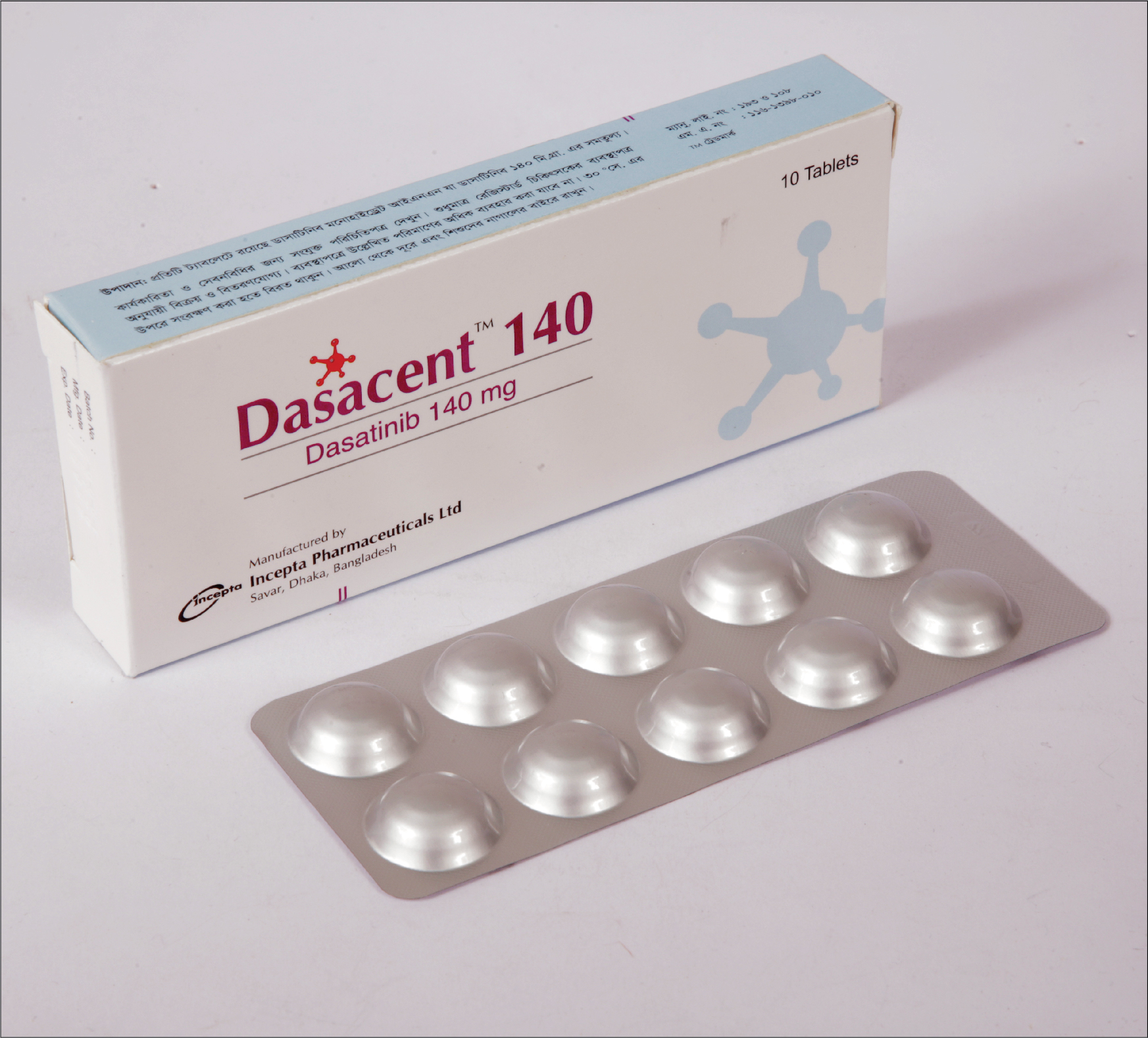
Dasacent 140 Tablet
- Brand Name - Dasacent 140 Tablet
- Generic Name - Dasatinib
- Doges From - Tablet
- Strength - 140 mg
- Pack Size - 10s
- Manufacture - Incepta Pharmaceuticals Ltd.
Customers who bought this item also bought

