
Indications - Short-term treatment in the following acute conditions: Post-traumatic pain, inflammation and swelling,e.g.due to sprains Post-operative pain, inflammation and swelling,e.g.following dental or orthopaedic surgery Painful and/or inflammatory conditions in gynaecology, e.g. primary dysmenorrhoea or adnexitis Migraine attacks Painful syndromes of the vertebral column Non-articular rheumatism As an adjuvant in severe painful inflammatory infections of the ear, nose, or throat, e.g. pharyngotonsillitis, otiti
Dosage & Administration - Adults: Following an initial loading dose of 50 mg, 25-50 mg is to be taken every eight hours if necessary. Migraine: An initial loading dose of 50 mg, then if necessary a further 25-50 mg after 2 hours. The maximum daily dose is 150 mg. The tablets should be swallowed whole with liquid, preferably before meals. Children: Children over 14 years of age: upto 75 mg daily in divided doses.
Side Effects - Side-effects of Diclofenac are usually mild and transient. However, if serious side-effects occur. Diclofenac should be discontinued. Occasional: epigastric pain, other gastro-intestinal disorders (e.g., nausea, vomiting, diarrhoea, abdominal cramps, dyspepsia,flatulence,anorexia). Rare: gastro-intestinal bleeding, peptic ulcer (with or without bleeding or perforation), bloody diarrhoea.
Contraindications - Diclofenac Potassium tablets are contraindicated in patients with known hypersensitivity to Diclofenac. Diclofenac should not be given to patients who have experienced asthma, urticaria, or allergic type reactions after taking aspirin or other NSAIDs. Severe, rarely fatal, anaphylactic-like reactions to NSAIDs have been reported in such patients. Diclofenac is contraindicated for the treatment of perioperative pain in the setting of coronary artery bypass graft (CABG) surgery.
Others - Pregnancy & Lactation Diclofenac should not be prescribed during pregnancy, unless there are compelling reasons for doing so. The lowest effective dosage should be used. This type of drugs are not recommended during the last trimester of pregnancy. Very small quantities of diclofenac may be detected in breast milk, but no undesirable effects on the infant are to be expected.
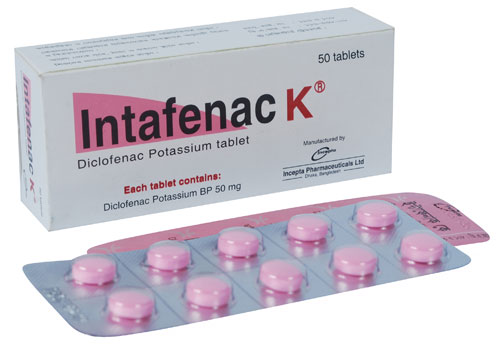
Intafenac K Tablet
- Brand Name - Intafenac K Tablet
- Generic Name - Diclofenac Potassium
- Doges From - Tablet
- Strength - 50 mg
- Pack Size - 50s
- Manufacture - Incepta Pharmaceuticals Ltd.
Customers who bought this item also bought