
Indications - Difluprednate is indicated for the treatment of inflammation and pain associated with ocular surgery. It is also indicated for the treatment of uveitis, pseudophakic cystoid macular edema(CME), ocular surface diseases, e.g. blepharitis & corneal inflammation.
Dosage & Administration - For the treatment of inflammation and pain associated with ocular surgery: Instill 1 drop into the conjunctival sac of the affected eye 4 times daily beginning 24 hours after surgery and continuing throughout the first 2 weeks of the post-operative period, followed by 2 times daily for a week and then a taper based on the response. For the treatment of endogenous anterior uveitis: Instill 1 drop into the conjunctival sac of the affected eye 4 times daily for 14 days followed by tapering as clinically indicated. For blepharitis: Instill 1 drop into the conjunctival sac of the affected eyes 2 times daily for 1 week & then once daily for 1 week. For pseudophakic cystoid macular edema: Instill 1 drop into the conjunctival sac of the affected eyes 2 times daily.
Side Effects - Adverse reactions associated with ophthalmic steroids include elevated intraocular pressure, which may be associated with optic nerve damage, visual acuity and field defects; posterior subcapsular cataract formation; secondary ocular infection from pathogens including herpes simplex, and perforation of the globe where there is thinning of the cornea or sclera. Ocular adverse reactions occurring with Difluprednate included corneal edema, ciliary and conjunctival hyperemia, eye pain, photophobia, posterior capsule opacification, anterior chamber cells, anterior chamber flare, conjunctival edema, and blepharitis for patient with ocular surgery.
Contraindications - Difluprednate is contraindicated in most active viral diseases of the cornea and conjunctiva including epithelial herpes simplex keratitis (dendritic keratitis), vaccinia, and varicella, and also in mycobacterial infection of the eye and fungal diseases of ocular structures.
Others - Pregnancy & Lactation Pregnancy Category C. Difluprednate has been shown to be embryotoxic and teratogenic when administered subcutaneously to rabbits. Since use of Difluprednate during human pregnancy has not been evaluated so Difluprednate should be used during pregnancy only if the potential benefit justifies the potential risk to the embryo or fetus. It is not known whether use of Difluprednate passes into breast milk. Caution should be exercised when it is administered to a nursing mothers
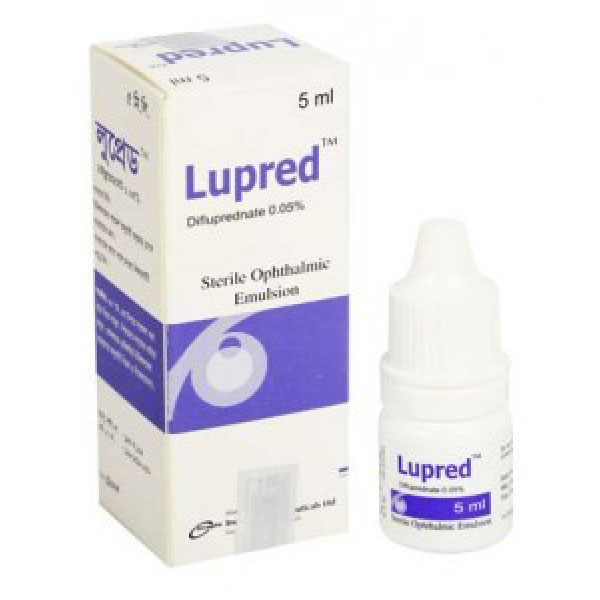
Lupred Eye Drops
- Brand Name - Lupred Eye Drop
- Generic Name - Difluprednate
- Doges From - Eye Drop
- Strength - 0.05%
- Pack Size - 5 ml
- Manufacture - Incepta Pharmaceuticals Ltd.
Customers who bought this item also bought