
Indications - Crizotinib is a kinase inhibitor indicated for the treatment of patients with- Metastatic non-small cell lung cancer (NSCLC) whose tumors are anaplastic lymphoma kinase (ALK)-positive Metastatic NSCLC whose tumors are ROS1-positive
Dosage & Administration - Recommended Dose: 250 mg orally, twice daily Geriatric Use: No differences in safety or efficacy were observed between older and younger patients. Clinical studies of Crizotinib in patients with ROS1-positive metastatic NSCLC did not include sufficient numbers of patients age 65 years and older to determine whether they respond differently from younger patients Pediatric Dose: The safety and effectiveness of Crizotinib in pediatric patients have not been established. Renal impairment: 250 mg orally, once daily in patients with severe renal impairment (creatinine clearance <30 mL/min) not requiring dialysis. No starting dose adjustment is needed for patients with mild (ClCr 60-89 mL/min) or moderate (ClCr 30-59 mL/min) renal impairment based on a population pharmacokinetic analysis. Hepatic Impairment: Caution should be used in patients with hepatic impairment
Side Effects - The most common adverse reactions (≥25%) are vision disorders, nausea, diarrhea, vomiting, edema, constipation, elevated transaminases, fatigue, decreased appetite, upper respiratory infection, dizziness, and neuropathy.
Contraindications - Data not show
Others - Pregnancy & Lactation Based on its mechanism of action, Crizotinib can cause fetal harm when administered to a pregnant woman. There are no available data on the use of Crizotinib during pregnancy. Females of reproductive potential should be advised of the potential risk to a fetus and use of effective contraception. There is no information regarding the presence of Crizotinib in human milk, the effects on the breastfed infant, or the effects on milk production. Because of the potential for adverse reactions in breastfed infants patients should not breastfeed during treatment with Crizotinib and for 45 days after the final dose. Precautions & Warnings Hepatotoxicity: Patients should undergo periodic liver testing. Crizotinib should be temporarily suspended, dose reduced or permanently suspended Interstitial lung disease (ILD)/ Pneumonitis: Drug should be permanently discontinued in patients with ILD/ Pneumonitis QT interval prolongation: Electrocardiograms and electrolytes in patients who have a history of or predisposition for QTc prolongation, or who are taking medications that prolong QT should be monitored. Crizotinib should be temporarily suspended, dose reduced or permanently suspended Bradycardia: Crizotinib can cause bradycardia. Heart rate and blood pressure should be regularly monitored. Crizotinib should be temporarily suspended, dose reduced or permanently suspended Severe visual loss: Ophthalmological evaluation should be performed. Crizotinib should be discontinued in severe visual loss Embryo-fetal toxicity: Crizotinib can cause fetal harm. Females of reproductive potential should be advised of the potential risk to a fetus and use of effective contraception
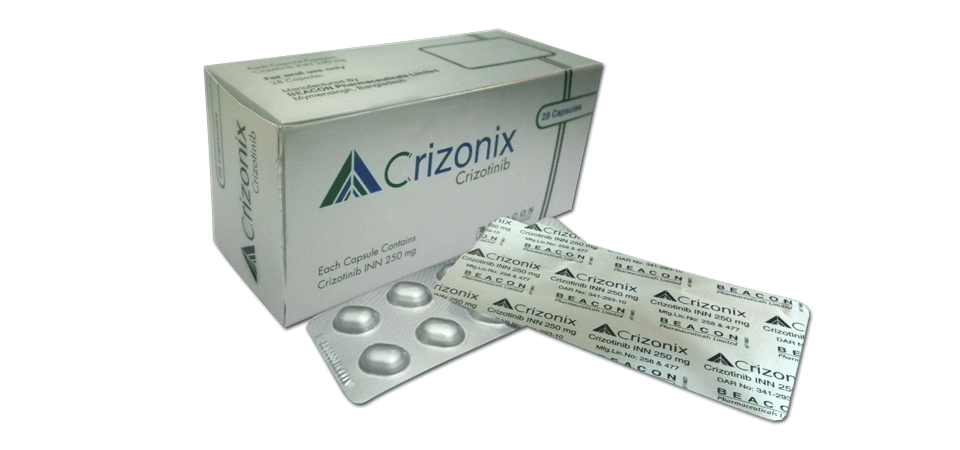
Capsule Crizonix 250mg
- Brand Name - Crizonix 250 Capsule
- Generic Name - Crizotinib
- Doges From - Capsule
- Strength - 250 mg
- Pack Size - 28s
- Manufacture - Beacon Pharmaceuticals Limited
Customers who bought this item also bought