

Indications - Procyclidine is used for the adjunctive treatment of all forms of parkinsonian syndrome. It is mainly used for the symptomatic treatment of idiopathic (paralysis agitants), postencephalitic and arteriosclerotic parkinsonian. It is used to control troublesome extrapyramidal symptoms including pseudoparkinsonian, acute dystonic reactions and akathisia induced by neuroleptic drugs such as phenothiazine derivatives.
Dosage & Administration - Tablet: This is administered orally, preferably after meals. Parkinsonism: Initially 2.5 mg 3 times a day, then 5 mg 3 times a day and occasionally 5 mg at bedtime. The dosage being adjusted as tolerated or until the total daily dose reaches 20 to 30 mg divided into 3 to 4 doses. Drug induced extrapyramidal symptom: Initially 2.5 mg 3 times a day. The dosage being increased by 2.5 mg increment per day as needed and tolerated. IM or IV injection: 5-10 mg, repeated if necessary after 20 minutes; maximum 20 mg daily can be given.
Side Effects - At usual dosage levels dryness of the mouth is generally the only adverse effect. Mydriasis, blurred vision and adverse G.I. effects (nausea, vomiting, epigastric distress, constipation) occur occasionally. An allergic reaction (e.g. rash) or muscular weakness may occasionally occur. High doses may cause vertigo and possibly confusion and hallucination. Adverse effect may usually be minimized by adjustment of dosage and administration after meal.
Contraindications - It should be given with caution in children and geriatric patients. It is advisable to be cautious in giving Procyclidine to patients with diarrhoea and cardiovascular disease, glaucoma, urinary retention, hepatic or renal impairment. The safety of using procyclidine during pregnancy has not been established. No data are available on the excretion of this drug in breast milk.
Others - Pregnancy & Lactation The safe use of this drug in pregnancy, lactation or in women of childbearing age requires that the potential benefits be weighed against the possible hazards to the mother and child.
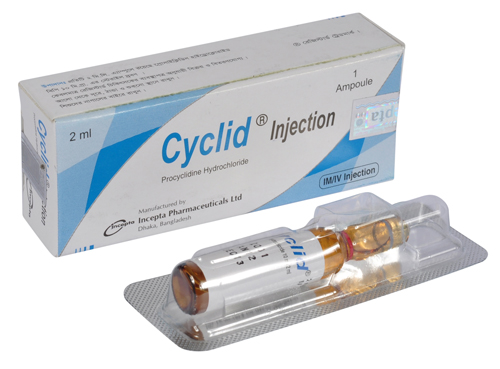
Cyclid Injection
- Brand Name - Cyclid IM/IV Injection
- Generic Name - Procyclidine Hydrochloride
- Doges From - Injection
- Strength - 10 mg
- Pack Size - 2 ml
- Manufacture - Incepta Pharmaceuticals Ltd.
Customers who bought this item also bought

