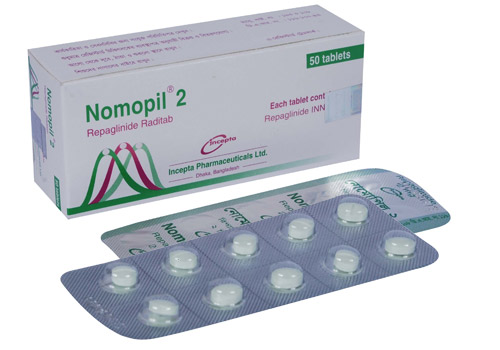

Indications - Repaglinide is indicated as an adjunct to diet and exercise to lower the blood glucose in patients with type 2 diabetes mellitus (NIDDM) whose hyperglycemia cannot be controlled satisfactorily by diet and exercise alone. It is also indicated for use in combination with Metformin to lower blood glucose in patients whose hyperglycemia cannot be controlled by exercise, diet, and either Repaglinide or Metformin alone.
Dosage & Administration - For patients not previously treated or whose HbA1c is <8%, the starting dose should be 0.5 mg before each meal. For patients previously treated with blood glucose-lowering drugs and whose HbA1c is >8%, the initial dose is 1 or 2 mg before each meal. Repaglinide should be taken immediately or up to 30 minutes before each meal. Dosage should be adjusted according to response at intervals of 1-2 weeks; up to 4 mg may be given as a single-dose, maximum 16 mg daily.
Side Effects - The most common side effects of Repaglinide are hypoglycemia and related symptoms. Others include upper respiratory tract infections, diarrhea, constipation, nausea and vomiting. Hypersensitivity reactions include rashes and urticaria.
Contraindications - Repaglinide is contraindicated in patients with: Diabetic ketoacidosis, with or without coma. Type 1 diabetes mellitus and Known hypersensitivity to the drug or its inactive ingredients.
Others - Pregnancy & Lactation Safety in pregnant women has not been established. Repaglinide should be used during pregnancy only if it is clearly needed. It is not known whether Repaglinide is excreted in human milk. Because many drugs are excreted in human milk and because of the potential for serious adverse reactions in nursing infants from Repaglinide, a decision should be made whether to discontinue nursing or the drug, taking into account the importance of the drug to the mother.
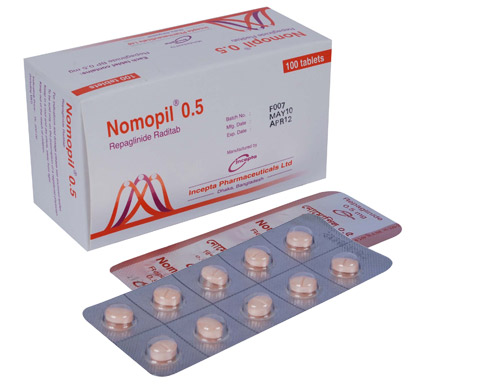
Nomopil 0.5 Tablet
- Brand Name - Nomopil 0.5 Tablet
- Generic Name - Repaglinide
- Doges From - Tablet
- Strength - 0.5 mg
- Pack Size - 100s
- Manufacture - Incepta Pharmaceuticals Ltd.
Customers who bought this item also bought