

Indications - This combination is indicated to reduce the risk of cardiovascular death and hospitalization for heart failure in patients with chronic heart failure (NYHA Class II-IV) and reduced ejection fraction. This combination is usually administered in conjunction with other heart failure therapies, in place of an ACE inhibitor or other ARB.
Dosage & Administration - The recommended starting dose of this combination is 49/51 mg twice-daily. Double the dose of this combination after 2 to 4 weeks to the target maintenance dose of 97/103 mg twice daily, as tolerated by the patient. Dose Adjustment For Patients Not Taking An ACE inhibitor Or ARB Or Previously Taking Low Doses Of These Agents. A starting dose of 24/26 mg twice-daily is recommended for patients not currently taking an ACE inhibitor or an angiotensin II receptor blocker (ARB) and for patients previously taking low doses of these agents. Double the dose of this combination every 2 to 4 weeks to the target maintenance dose of 97/103 mg twice daily, as tolerated by the patient. Sacubitril & Valsartan is contraindicated with concomitant use of an angiotensin-converting enzyme (ACE) inhibitor. If switching from an ACE inhibitor to Sacubitril & Valsartan allow a washout period of 36 hours between administration of the two drugs.
Side Effects - Clinically significant adverse reactions that appear in other sections of the labeling include: Angioedema, Hypotension, Impaired Renal Function, Hyperkalemia
Contraindications - This combination is contraindicated: In patients with hypersensitivity to any component In patients with a history of angioedema related to previous ACE inhibitor or ARB therapy With concomitant use of ACE inhibitors. Do not administer within 36 hours of switching from or to an ACE inhibitor With concomitant use of aliskiren in patients with diabetes
Others - Pregnancy & Lactation Pregnancy: Advise female patients of childbearing age about the consequences of exposure to this combination during pregnancy. Discuss treatment options with women planning to become pregnant. Ask patients to report pregnancies to their physicians as soon as possible Lactation: There is no information regarding the presence of sacubitril/valsartan in human milk, the effects on the breastfed infant, or the effects on milk production. Sacubitril/valsartan is present in rat milk. Because of the potential for serious adverse reactions in breastfed infants from exposure to sacubitril/valsartan, advise a nursing woman that breastfeeding is not recommended during treatment with sacubitril/valsartan.
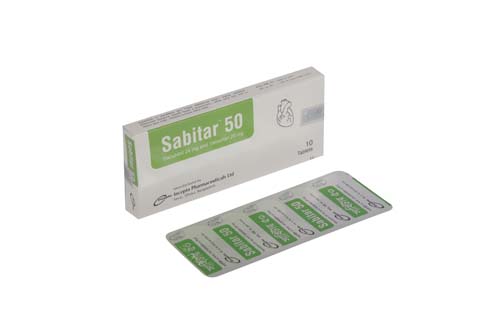
Sabitar 50 Tablet
- Brand Name - Sabitar 50 Tablet
- Generic Name - Sacubitril + Valsartan
- Doges From - Tablet
- Strength - 24 mg+26 mg
- Pack Size - 10s
- Manufacture - Incepta Pharmaceuticals Ltd.
Customers who bought this item also bought