

Indications - Gastrointestinal Stromal Tumor (GIST): Sunitinib is indicated for the treatment of gastrointestinal stromal tumor after disease progression on or intolerance to imatinib mesylate. Advanced Renal Cell Carcinoma (RCC): Sunitinib is indicated for the treatment of advanced renal cell carcinoma. Advanced Pancreatic Neuroendocrine Tumors (pNET): Sunitinib is indicated for the treatment of progressive, well-differentiated pancreatic neuroendocrine tumors in patients with unresectable locally advanced or metastatic disease.
Dosage & Administration - Recommended Dose For GIST And RCC: The recommended dose of Sunitinib for gastrointestinal stromal tumor (GIST) and advanced renal cell carcinoma (RCC) is one 50 mg oral dose taken once daily, on a schedule of 4 weeks on treatment followed by 2 weeks off (Schedule 4/2). Sunitinib may be taken with or without food. Recommended Dose For pNET: The recommended dose of Sunitinib for pancreatic neuroendocrine tumors (pNET) is 37.5 mg taken orally once daily continuously without a scheduled off-treatment period. Sunitinib may be taken with or without food. Dose Modification: Dose interruption and/or dose modification in 12.5 mg increments or decrements is recommended based on individual safety and tolerability. The maximum dose administered in the Phase 3 pNET study was 50 mg daily. Strong CYP3A4 inhibitors such as ketoconazole may increas e sunitinib plasma concentrations. Selection of an alternate concomitant medication with no or minimal enzyme inhibition potential is recommended. A dose reduction for Sunitinib to a minimum of 37.5 mg (GIST and RCC) or 25 mg (pNET) daily should be considered if Sunitinib must be co-administered with a strong CYP3A4 inhibitor CYP3A4 inducers such as rifampin may decreas e sunitinib plasma concentrations. Selection of an alternate concomitant medication with no or minimal enzyme induction potential is recommended. A dose increase for Sunitinib to a maximum of 87.5 mg (GIST and RCC) or 62.5 mg (pNET) daily should be considered if Sunitinib must be co-administered with a CYP3A4 inducer. If dose is increased, the patient should be monitored carefully for toxicity
Side Effects - Fatigue, GI disorders, skin discoloration, rash, palmar-plantar erythrodysesthesia, dry skin, hair color changes, mucosal inflammation, asthenia, dysguesia, anorexia, HTN, neutropenia.
Contraindications - Hypersensitivity, Renal impairment
Others - Pregnancy & Lactation Pregnancy Category D. There is positive evidence of human fetal risk based on adverse reaction data from investigational or marketing experience or studies in humans, but potential benefits may warrant use of the drug in pregnant women despite potential risks.
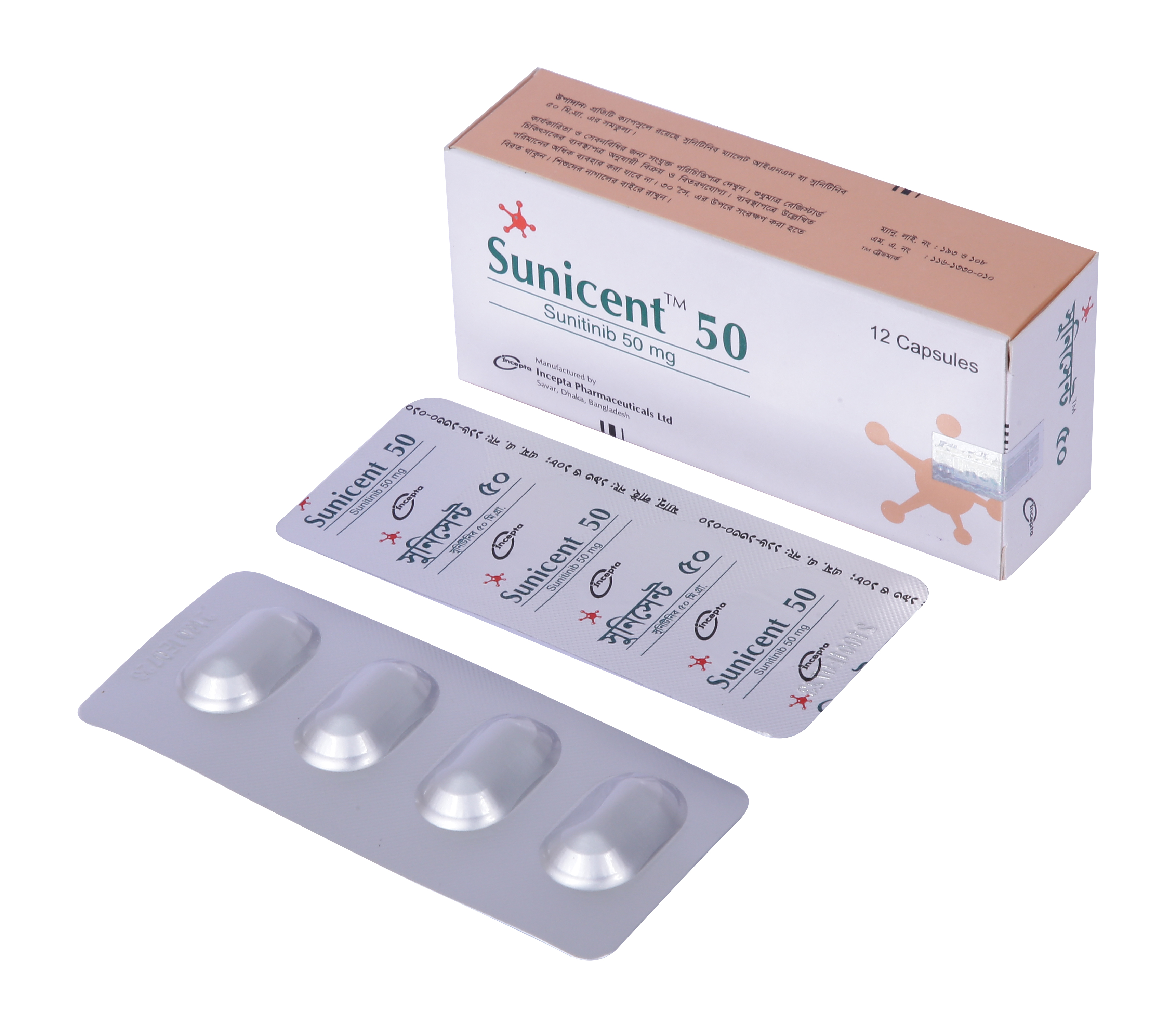
Sunicent 50 Capsule
- Brand Name - Sunicent 50 Capsule
- Generic Name - Sunitinib
- Doges From - Capsule
- Strength - 50 mg
- Pack Size - 12s
- Manufacture - Incepta Pharmaceuticals Ltd.
Customers who bought this item also bought
