
Indications - Hepatocellular Carcinoma: Sorafenib is indicated for the treatment of patients with unresectablehepatocellular carcinoma (HCC). Renal Cell Carcinoma: Sorafenib is indicated for the treatment of patients with advanced renal cell carcinoma (RCC).
Dosage & Administration - Dosage Advanced renal cell carcinoma: 400 mg bid. May continue until patient is no longer responding or unacceptable toxicity occurs. Hepatic Impairment: No safety data is available for use in patients with Child-Pugh C hepatic impairment. Administration : Should be taken on an empty stomach. May be taken with a low or moderate fat meal. If the patient intends to have a high fat meal, sorafenib should be taken on an empty stomach at least 1 hr before or 2 hr after meals. Swallow whole, do not chew/crush.
Side Effects - Rash and hand-foot skin reactions. Hypophosphataemia, hypertension, bleeding, tinnitus, depression and erectile dysfunction. Alopecia, pruritus, dry skin, erythema, acne, flushing, exfoliative dermatitis, hoarseness, GI disturbances, arthralgia, myalgia, asthenia, pain and peripheral neuropathy.
Contraindications - Sorafenib is contraindicated in patients with known severe hypersensitivity to sorafenib or any other component of Sorafenib. Sorafenib in combination with carboplatin and paclitaxel is contraindicated in patients with squamous cell lung cancer
Others - Pregnancy & Lactation Pregnancy category D There is positive evidence of human foetal risk, but the benefits from use in pregnant women may be acceptable despite the risk (e.g., if the drug is needed in a life-threatening situation or for a serious disease for which safer drugs cannot be used or are ineffective).
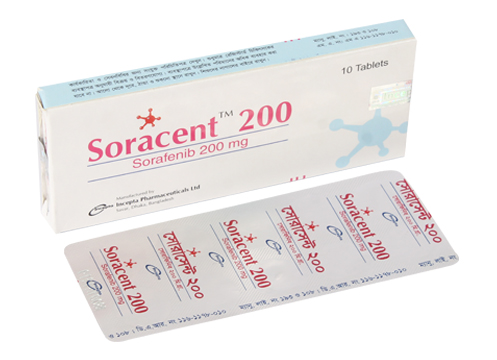
Soracent 200 Tablet
- Brand Name - Soracent 200 Tablet
- Generic Name - Sorafenib Tosylate
- Doges From - Tablet
- Strength - 200 mg
- Pack Size - 30s
- Manufacture - Incepta Pharmaceuticals Ltd.
Customers who bought this item also bought
