

Indications - Semaglutide is indicated as an adjunct to diet and exercise to improve glycemic control in adults with type 2 diabetes mellitus. Semaglutide is not recommended as a first-line therapy for patients who have inadequate glycemic control on diet and exercise because of the uncertain relevance of rodent C-cell tumor findings to humans. Semaglutide has not been studied in patients with a history of pancreatitis. Consider other antidiabetic therapies in patients with a history of pancreatitis. Semaglutide is not indicated for use in patients with type 1 diabetes mellitus or for the treatment of patients with diabetic ketoacidosis, as it would not be effective in these settings.
Dosage & Administration - Instruct patients to take Semaglutide at least 30 minutes before the first food, beverage, or other oral medications of the day with no more than 4 ounces of plain water only. Waiting less than 30 minutes, or taking Semaglutide with food, beverages (other than plain water) or other oral medications will lessen the effect of Semaglutide by decreasing its absorption. Waiting more than 30 minutes to eat may increase the absorption of Semaglutide. Swallow tablets whole. Do not split, crush, or chew tablets. Start Semaglutide with 3 mg once daily for 30 days. The 3 mg dose is intended for treatment initiation and is not effective for glycemic control. After 30 days on the 3 mg dose, increase the dose to 7 mg once daily. Dose may be increased to 14 mg once daily if additional glycemic control is needed after at least 30 days on the 7 mg dose. Taking two 7 mg Semaglutide tablets to achieve a 14 mg dose is not recommended. If a dose is missed, the missed dose should be skipped, and the next dose should be taken the following day.
Side Effects - The following serious adverse reactions are described below or elsewhere in the prescribing information: Risk of Thyroid C-cell Tumors Pancreatitis Diabetic Retinopathy Complications Hypoglycemia with Concomitant Use of Insulin Secretagogues or Insulin Acute Kidney Injury Hypersensitivity
Contraindications - Semaglutide is contraindicated in patients with: A personal or family history of medullary thyroid carcinoma (MTC) or in patients with Multiple Endocrine Neoplasia syndrome type 2 (MEN 2). Known hypersensitivity to semaglutide or to any of the components in Semaglutide.
Others - Pregnancy & Lactation Available data with Semaglutide use in pregnant women are insufficient to evaluate for a drug-associated risk of major birth defects, miscarriage or other adverse maternal or fetal outcomes. There are clinical considerations regarding the risks of poorly controlled diabetes in pregnancy. There are no data on the presence of semaglutide in human milk, the effects on the breastfed infant, or the effects on milk production. Semaglutide was present in the milk of lactating rats.
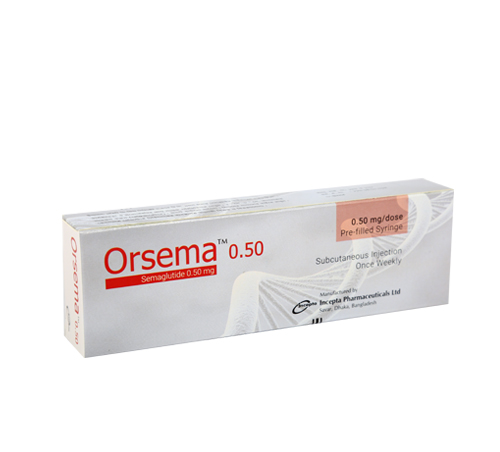
Orsema 0.50 SC Injection
- Brand Name - Orsema 0.50 SC Injection
- Generic Name - Semaglutide
- Doges From - Injection
- Strength - 0.50 mg
- Pack Size - 1s
- Manufacture - Incepta Pharmaceuticals Ltd.
Customers who bought this item also bought

