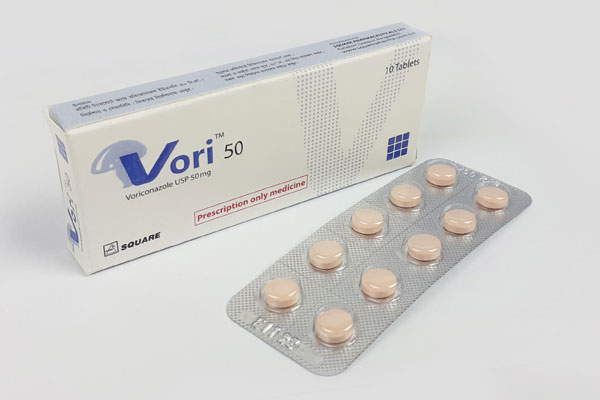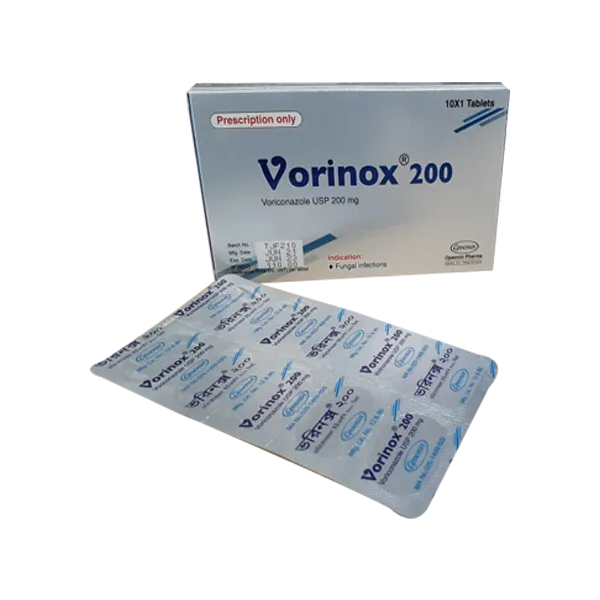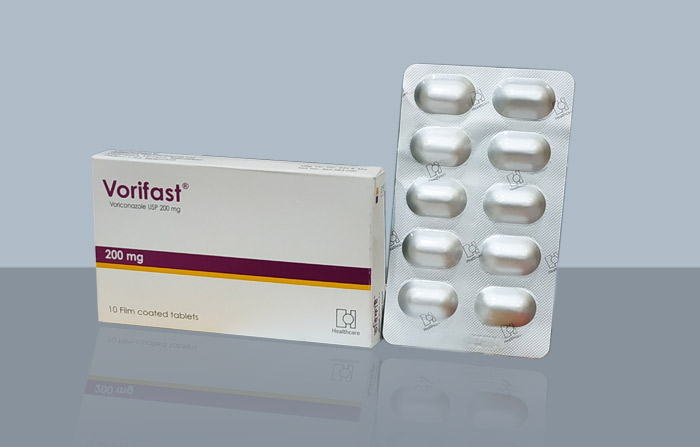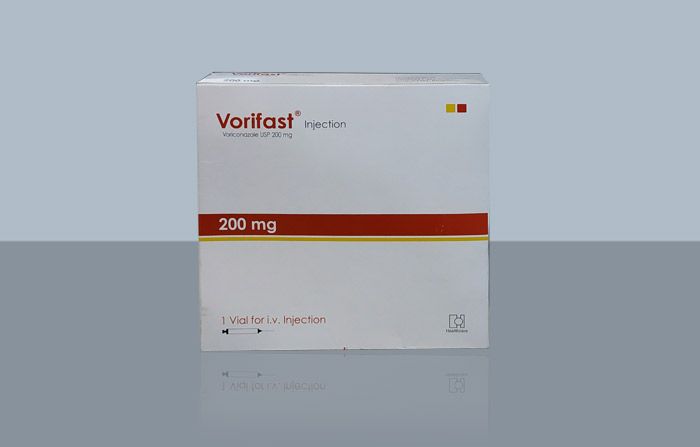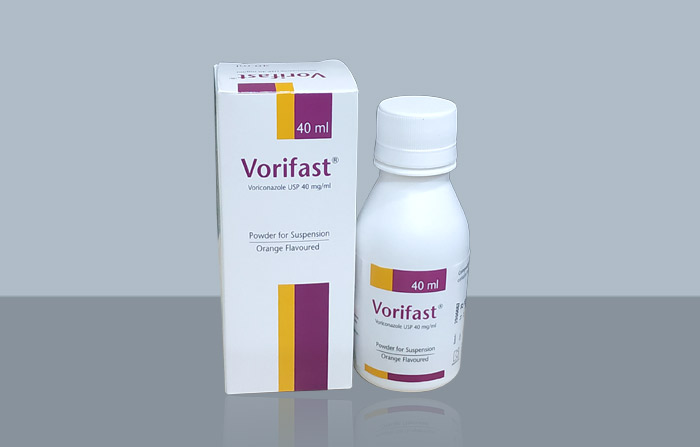

Indications - Voriconazole is an azole antifungal medicine. It is indicated for use in patients 12 years of age and older in the treatment of following fungal infections- Invasive aspergillosis Candidemia (nonneutropenic) and disseminated candidiasis in skin, abdomen, kidney, bladder wall and wounds Esophageal candidiasis Serious infections caused by Scedosporium apiospermum and Fusarium Species including Fusarium solani Patients intolerant of, or refractory to other therapy.
Dosage & Administration - Oral- Voriconazole tablet and powder for suspension are to be taken at least one hour before or one hour following a meal At or over 40 kg body weight: Loading dose regimen is 400 mg or 10 ml every 12 hours (for the first 24 hours) and maintenance dose (after first 24 hours) is 200 mg or 5 ml twice daily. Below 40 Kg body weight: Loading dose regimen is 200 mg or 5 ml every 12 hours (for the first 24 hours) and maintenance dose (after first 24 hours) is 100 mg or 2.5 ml twice daily. Or, as directed by the registered physician. Injection- Invasive Aspergillosisd : Loading dose: 6 mg/kg 12 hourly for the first 24 hours. Maintenance Dose: 4 mg/kg 12 hourly. Candidemia in nonneutropenic patients and other deep tissue Candida infections: Loading dose: 6 mg/kg 12 hourly for the first 24 hours. Maintenance Dose: 3-4 mg/kg 12 hourly. Scedosporiosis and Fusariosis: Loading dose: 6 mg/kg 12 hourly for the first 24 hours. Maintenance Dose: 4 mg/kg 12 hourly.
Side Effects - The most common side effects are abdominal pain, anemia, blurred vision, headache, chest pain, nausea and diarrhea.
Contraindications - Known hypersensitivity to Voriconazole or any other components of this drug- Co-administration with terfenadine, astemizole, cisapride, pimozide or quinidine, sirolimus due to risk of serious adverse reactions Co-administration with rifampin, carbamazepine, long-acting barbiturates, efavirenz, ritonavir, rifabutin, ergot alkaloids and St. John's Wort due to risk of loss of efficacy
Others - Pregnancy & Lactation There are no adequate and well-controlled studies in pregnant woman. It should be used during pregnancy only if the potential benefit justifies the potential risk to the fetus.
Vorifast Powder for Suspension
- Brand Name - Vorifast Suspension
- Generic Name - Voriconazole
- Doges From - Suspension
- Strength - 200 mg
- Pack Size - 40 ml
- Manufacture - Healthcare Pharmaceutical Limited
Customers who bought this item also bought