
Indications - Tenecteplase is indicated for use in the reduction of mortality associated with acute myocardial infarction (AMI). Treatment should be initiated as soon as possible after the onset of acute myocardial infarction symptoms.
Dosage & Administration - Dosage Tenecteplase is for intravenous administration only. The recommended total dose should not exceed 50 mg and is based upon patient weight. A single bolus dose should be administered over 5 seconds based on patient weight. Treatment should be initiated as soon as possible after the onset of AMI symptoms. Patient Weight <60 kg: 30 mg Tenecteplase Patient Weight ≥60 to <70 kg: 35 mg Tenecteplase Patient Weight ≥70 to <80 kg: 40 mg Tenecteplase Patient Weight ≥80 to <90 kg: 45 mg Tenecteplase Patient Weight ≥90 kg: 50 mg Tenecteplase Administration The product should be visually inspected prior to administration for particulate matter and discoloration. Tenecteplase may be administered as reconstituted at 5 mg/mL. Precipitation may occur when Tenecteplase is administered in an IV line containing dextrose. Dextrose-containing lines should be flushed with a saline-containing solution prior to and following single bolus administration of Tenecteplase. Reconstituted Tenecteplase should be administered as a single IV bolus over 5 seconds. Because Tenecteplase contains no antibacterial preservatives, it should be reconstituted immediately before use. If the reconstituted Tenecteplase is not used immediately, refrigerate the Tenecteplase vial at 2-8°C and use within 8 hours. Although the supplied syringe is compatible with a conventional needle, this syringe is designed to be used with needleless IV systems. From the information below, follow the instructions applicable to the IV system in use.
Side Effects - The most frequent adverse reaction associated with Tenecteplase is bleeding. Should serious bleeding occur, concomitant heparin and antiplatelet therapy should be discontinued. Death or permanent disability can occur in patients who experience stroke or serious bleeding episodes. For Tenecteplase-treated patients in ASSENT-2, the incidence of intracranial hemorrhage was 0.9% and any stroke was 1.8%. The incidence of all strokes, including intracranial bleeding, increases with incre
Contraindications - Tenecteplase therapy in patients with acute myocardial infarction is contraindicated in the following situations because of an increased risk of bleeding: Active internal bleeding History of cerebrovascular accident Intracranial or intraspinal surgery or trauma within 2 months Intracranial neoplasm, arteriovenous malformation, or aneurysm Known bleeding diathesis Severe uncontrolled hypertension
Others - Pregnancy & Lactation Pregnancy: Tenectaplase has been shown to elicit maternal and embryo toxicity in rabbits given multiple IV administrations. In rabbits administered 0.5, 1.5, and 5.0 mg/kg/day during organogenesis, vaginal hemorrhage resulted in maternal deaths. Subsequent embryonic deaths were secondary to maternal hemorrhage and no fetal anomalies were observed. Tenectaplase does not elicit maternal and embryo toxicity in rabbits following a single IV administration. Thus, in developmental toxicity studies conducted in rabbits, the no observable effect level (NOEL) of a single IV administration of Tenectaplase on maternal or developmental toxicity (5 mg/kg) was approximately 7 times human exposure (based on AUC) at the dose for AMI. There are no adequate and well controlled studies in pregnant women. Tenectaplase should be given to pregnant women only if the potential benefits justify the potential risk to the fetus. Nursing Mothers: It is not known if Tenectaplase is excreted in human milk. Because many drugs are excreted in human milk, caution should be exercised when Tenectaplase is administered to a nursing woman.
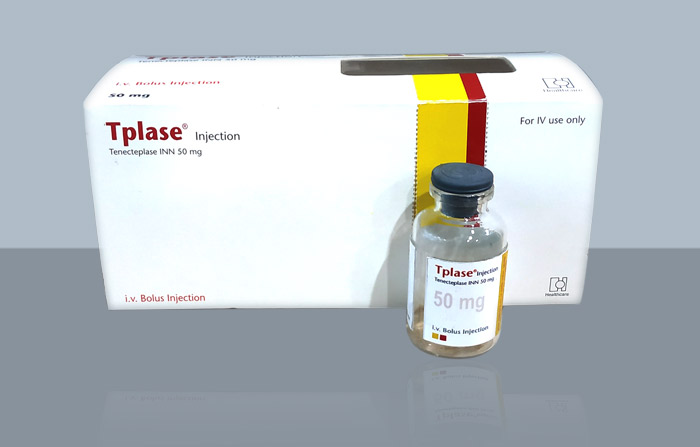
Tplase 50 IV Injection
- Brand Name - Tplase 50 IV Injection
- Generic Name - Tenecteplase
- Doges From - Injection
- Strength - 50 mg
- Pack Size - 1s
- Manufacture - Healthcare Pharmaceutical Limited
Customers who bought this item also bought