
Indications - Vitamin C is indicated for prevention and treatment of scurvy. It may be indicated in pregnancy, lactation, infection, trauma, burns, cold exposure, following surgery, fever, stress, peptic ulcer, cancer, methaemoglobinaemia and in infants receiving unfortified formulas. It is also prescribed for haematuria, dental caries, pyorrhea, acne, infertility, atherosclerosis, fractures, leg ulcers, hay fever, vascular thrombosis prevention, levodopa toxicity, succinyl-choline toxicity, arsenic toxicity etc. To reduce the risk of stroke in the elderly, long-term supplementation with Vitamin C is essential.
Dosage & Administration - Oral administration- For the prevention of scurvy: 1 tablet daily For the treatment of scurvy: 1-2 tablets daily; but dose may be increased depending on the severity of the condition. For the reduction of risk of stroke in the elderly: 1-2 tablets daily. In other cases: 1 tablet daily or as directed by the physician. Maximum safe dose is 2000 mg daily in divided doses. Parenteral administration- Vitamin C is usually administered orally. When oral administration is not feasible or when malabsorption is suspected, the drug may be administered IM, IV, or subcutaneously. When given parenterally, utilization of the vitamin reportedly is best after IM administration and that is the preferred parenteral route. For intravenous injection, dilution into a large volume parenteral such as Normal Saline, Water for Injection, or Glucose is recommended to minimize the adverse reactions associated with intravenous injection. The average protective dose of vitamin C for adults is 70 to 150 mg daily. In the presence of scurvy, doses of 300 mg to 1 g daily are recommended. However, as much as 6 g has been administered parenterally to normal adults without evidence of toxicity. To enhance wound healing, doses of 300 to 500 mg daily for a week or ten days both preoperatively and postoperatively are generally considered adequate, although considerably larger amounts have been recommended. In the treatment of burns, doses are governed by the extent of tissue injury. For severe burns, daily doses of 1 to 2 g are recommended. In other conditions in which the need for vitamin C is increased, three to five times the daily optimum allowances appear to be adequate. Parenteral drug products should be inspected visually for particulate matter and discoloration prior to administration, whenever the solution and container permit.
Side Effects - Oral administration- For the prevention of scurvy: 1 tablet daily For the treatment of scurvy: 1-2 tablets daily; but dose may be increased depending on the severity of the condition. For the reduction of risk of stroke in the elderly: 1-2 tablets daily. In other cases: 1 tablet daily or as directed by the physician. Maximum safe dose is 2000 mg daily in divided doses. Parenteral administration- Vitamin C is usually administered orally. When oral administration is not feasible or when malabsorption is suspected, the drug may be administered IM, IV, or subcutaneously. When given parenterally, utilization of the vitamin reportedly is best after IM administration and that is the preferred parenteral route. For intravenous injection, dilution into a large volume parenteral such as Normal Saline, Water for Injection, or Glucose is recommended to minimize the adverse reactions associated with intravenous injection. The average protective dose of vitamin C for adults is 70 to 150 mg daily. In the presence of scurvy, doses of 300 mg to 1 g daily are recommended. However, as much as 6 g has been administered parenterally to normal adults without evidence of toxicity. To enhance wound healing, doses of 300 to 500 mg daily for a week or ten days both preoperatively and postoperatively are generally considered adequate, although considerably larger amounts have been recommended. In the treatment of burns, doses are governed by the extent of tissue injury. For severe burns, daily doses of 1 to 2 g are recommended. In other conditions in which the need for vitamin C is increased, three to five times the daily optimum allowances appear to be adequate. Parenteral drug products should be inspected visually for particulate matter and discoloration prior to administration, whenever the solution and container permit.
Contraindications - N/A
Others - Pregnancy & Lactation The drug is safe in normal doses in pregnant women, but a daily intake of 5 gm or more is reported to have caused abortion. The drug may be taken safely during lactation. Precautions & Warnings Ingestion of megadose (more than 1000 mg daily) of vitamin C during pregnancy has resulted in scurvy in neonates. Vitamin C in mega-doses has been contraindicated for patients with hyperoxaluria. Vitamin C itself is a reactive substance in the redox system and can give rise to false positive reactions in certain analytical tests for glucose, uric acid, creatine and occult blood.
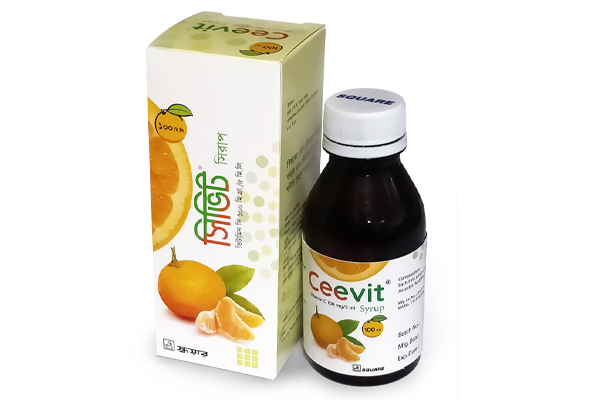
Ceevit Syrup
- Brand Name - Ceevit Syrup
- Generic Name - Vitamin C [Ascorbic acid]
- Doges From - Syrup
- Strength - 100 mg
- Pack Size - 100 ml
- Manufacture - Square Pharmaceutical Ltd.
Customers who bought this item also bought

