
Indications - Management of acidosis in cardiac arrest. Management of metabolic acidosis in: Severe renal disease Uncontrolled diabetes Circulatory insufficiency from shock or dehydration Severe primary lactic acidosis Alkalinization of urine.
Dosage & Administration - Oral: The usual dose is 300 mg to 2 grams, 1 to 4 times daily. Intravenous (Severe metabolic acidosis): Adult: By slow inj of a hypertonic solution of up to 8.4% (1000 mmol/L), or by continuous infusion of a weaker solution, usually 1.26% (150 mmol/L). For correction of acidosis during advanced cardiac life support procedures, 50 ml of an 8.4% solution may be given. Elderly: Dosage adjustments may be required.
Side Effects - This medication is generally well tolerated. However, high doses may cause headache, nausea or irritability. If any of these effects continue or become bothersome, inform your doctor. Notify your doctor if you develop: muscle weakness, slow reflexes, confusion, swelling of the feet or ankles, black tar-like stools, coffee-ground vomit. If you notice other effects not listed above, contact your doctor or pharmacist.
Contraindications - This drug is contraindicated in hypoventilatory states, chloride depletion owing to continuous gastric fluid loss, metabolic and/or respiratory alkalosis, hypocalcemia and diuretics known to produce hypochloremic alkalosis.
Others - Pregnancy & Lactation Category C: Either studies in animals have revealed adverse effects on the foetus (teratogenic or embryocidal or other) and there are no controlled studies in women or studies in women and animals are not available. Drugs should be given only if the potential benefit justifies the potential risk to the foetus.
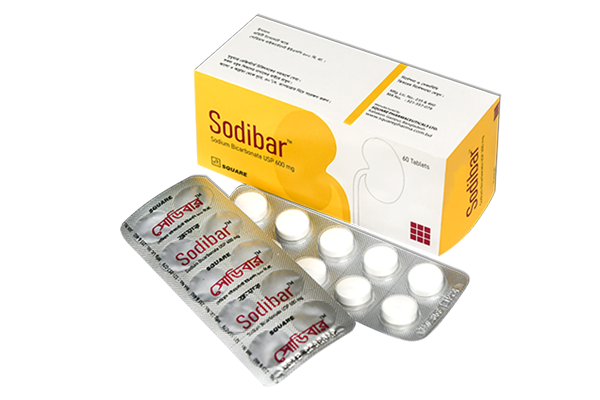
Tablet Sodibar 600 mg
- Brand Name - Sodibar 600
- Generic Name - Sodium Bicarbonate
- Doges From - Tablet
- Strength - 600 mg
- Pack Size - 60s
- Manufacture - Square Pharmaceutical Ltd.
Customers who bought this item also bought