

Indications - Ornidazole is indicated for Amoebiasis (Intestinal and hepatic), Giardiasis, Trichomoniasis, Bacterial vaginosis, Treatment of susceptible anaerobic infections
Dosage & Administration - Amoebiasis: Adults: 500 mg twice a day for 5 days. Children: 10-25 mg per kg body weight in two divided doses. Amoebic dysentery: Adults: 1.5 gm once a day for 3 days. Children: 40 mg per kg body weight, once a day for 3 days. Giardiasis: Adults: 1.5 gm once daily for 1-2 days. Children: 40 mg per kg body weight for 2 days. Trichomoniasis: 1.5 gm once or 500 mg twice a day for 5 days. Sexual partner should also be treated at the same time. Bacterial vaginosis: 3 tablets of 500 mg each as a single dose or one tablet of 500 mg once daily for 5-7 days.
Side Effects - Side effects of Ornidazole have been mainly limited to the gastrointestinal tract nausea, vomiting, epigastric pain and central nervous system dizziness, headache, lassitude. Unlike other nitroimidazoles, Ornidazole does not interact with alcohol, although this requires further study. Leukopenia has been described occasionally during therapy. Adverse central nervous system CNS effects of Ornidazole have mainly included headache, dizziness, lassitude or somnolence, fatigue and weakness. Adverse CNS effects of Ornidazole may be less than that happens with metronidazole. Seizures have not been reported with Ornidazole in studies available to date.
Contraindications - Previous hypersensitivity to Ornidazole and to other nitroimidazoles. Ornidazole is contraindicated in central nervous system disorders, particularly in epilepsy or in peripheral neuropathy.
Others - Pregnancy & Lactation Adequate clinical trials have not been conducted. Ornidazole should be prescribed only if the potential benefit justifies the potential risk to fetus/neonate.
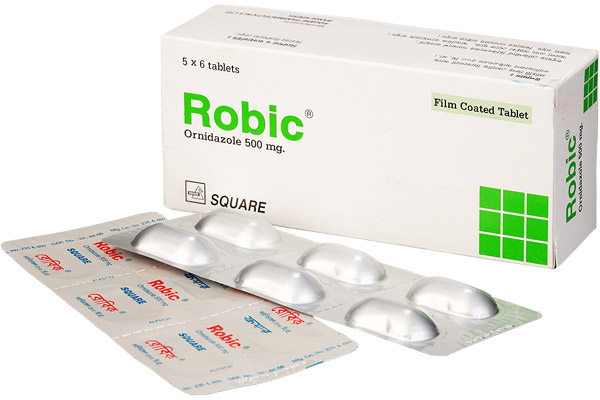
Tablet Robic 500 mg
- Brand Name - Robic 500
- Generic Name - Ornidazole
- Doges From - Tablet
- Strength - 500 mg
- Pack Size - 30s
- Manufacture - Square Pharmaceutical Ltd.
Customers who bought this item also bought
