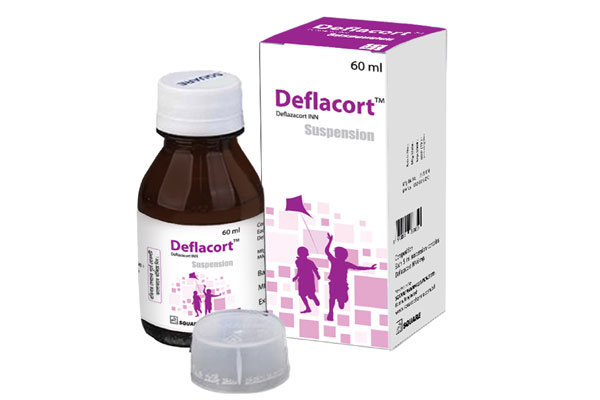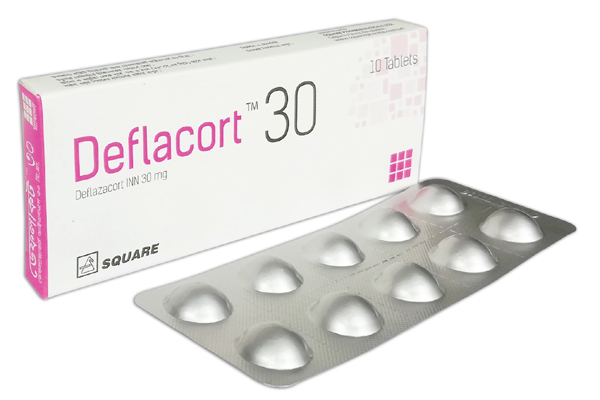

Indications - Anaphylaxis, asthma, severe hypersensitivity reactions Rheumatoid arthritis, juvenile chronic arthritis, polymyalgia rheumatica Systemic lupus erythematosus, dermatomyositis, mixed connective tissue disease (other than systemic sclerosis), polyarteritis nodosa, sarcoidosis Pemphigus, bullous pemphigoid, pyoderma gangrenosum Minimal change nephrotic syndrome, acute interstitial nephritis Rheumatic carditis Ulcerative colitis, Crohn's disease Uveitis, optic neuritis Autoimmune haemolytic anaemia, idiopathic thrombocytopenic purpura Acute and lymphatic leukaemia, malignant lymphoma, multiple myeloma Immune suppression in transplantation
Dosage & Administration - Adults: For acute disorders: up to 120 mg/day Deflazacort may need to be given initially. Maintenance doses in most conditions are within the range 3-18 mg/day. Rheumatoid arthritis: The maintenance dose is usually within the range 3-18 mg/day. The smallest effective dose should be used and increased if necessary. Bronchial asthma: In the treatment of an acute attack, high doses of 48-72 mg/day may be needed depending on severity and gradually reduced once the attack has been controlled. For maintenance in chronic asthma, doses should be titrated to the lowest dose that controls symptoms. Other conditions: The dose of Deflazacort depends on clinical need titrated to the lowest effective dose for maintenance. Starting doses may be estimated on the basis of ratio of 5 mg prednisone or prednisolone to 6 mg Deflazacort. Children: Alternate day administration may be appropriate. Doses of Deflazacort usually lie in the range 0.25-1.5 mg/kg/day. The following ranges provide general guidance: Juvenile chronic arthritis: The usual maintenance dose is between 0.25 to 1.0 mg/kg/day. Nephrotic syndrome: Initial dose of usually 1.5 mg/kg/day followed by down titration according to clinical need. Bronchial asthma: The initial dose should be between 0.25 - 1.0 mg/kg on alternate days. Deflazacort withdrawal: In patients who have received more than physiological doses of systemic corticosteroids (approximately 9 mg per day or equivalent) for greater than 3 weeks, withdrawal should not be abrupt. How dose reduction should be carried out depends largely on whether the disease is likely to relapse as the dose of systemic corticosteroids is reduced.
Side Effects - After administration occasionally GI disturbances like dyspepsia, nausea; musculoskeletal disorders like myopathy; depressed mood, skin atrophy, acne etc. may occur.
Contraindications - Hypersensitivity to or any of the ingredients. Patients receiving live virus immunisation.
Others - Pregnancy & Lactation Deflazacort does cross the placenta. When administered for prolonged periods or repeatedly during pregnancy, corticosteroids may increase the risk of intra-uterine growth retardation. As with all drugs, corticosteroids should only be prescribed when the benefits to the mother and child outweigh the risks. Corticosteroids are excreted in breast milk. Doses up to 50 mg daily of Deflazacort are unlikely to cause systemic effects in the infant Overdose Effects In patients who have received more than physiological doses of systemic corticosteroids (approximately 9mg per day or equivalent) for greater than 3 weeks, withdrawal should not be abrupt. How dose reduction should becarried out depends largely on whether the disease is likely to relapse as the dose of systemic corticosteroids is reduced. Use in Special Populations Elderly: In elderly patients, no special precautions other than those usually adopted in patients receiving glucocorticoid therapy are necessary. Hepatic impairment: In patients with hepatic impairment, blood levels of Deflazacort may be increased. Therefore the dose of Deflazacort should be carefully monitored and adjusted to the minimum effective dose. Renal impairment: In renal impaired patients, no special precautions other than those usually adopted in patients receiving glucocorticoid therapy are necessary.
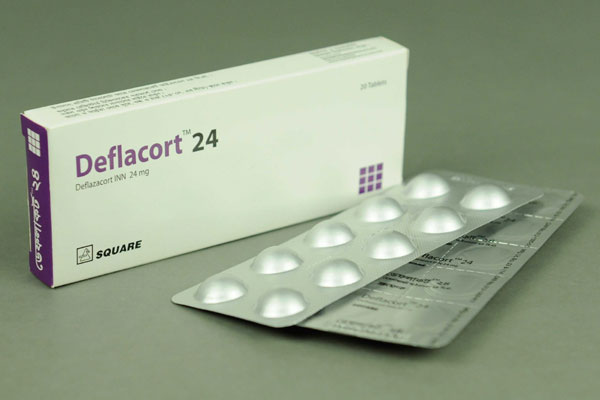
Tablet Deflacort 24mg
- Brand Name - Deflacort 24 Tablet
- Generic Name - Deflazacort
- Doges From - Tablet
- Strength - 24 mg
- Pack Size - 20s
- Manufacture - Square Pharmaceutical Ltd.
Customers who bought this item also bought