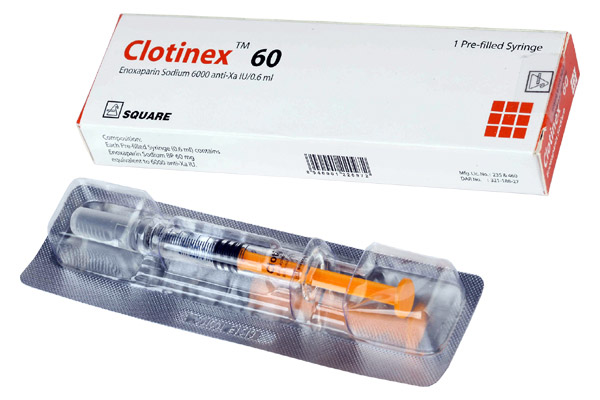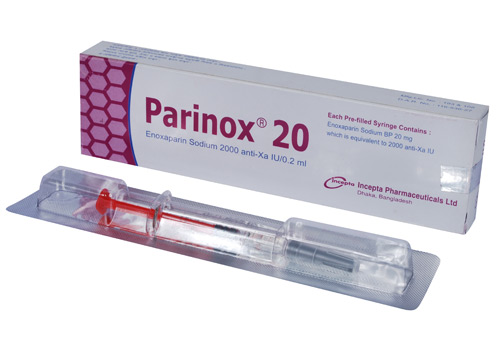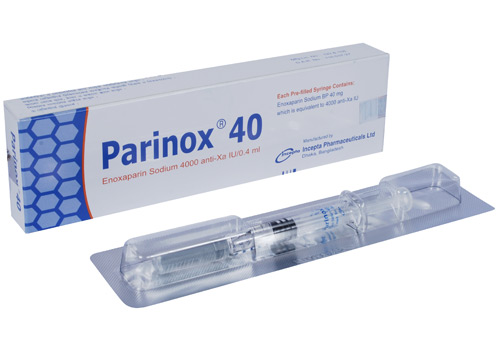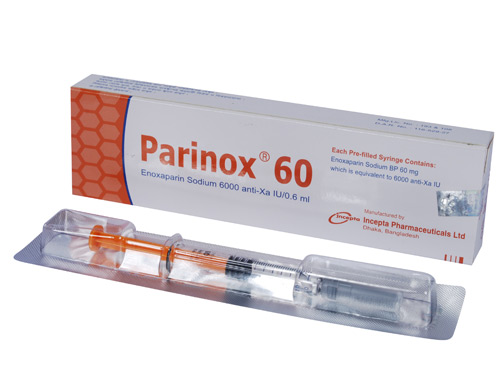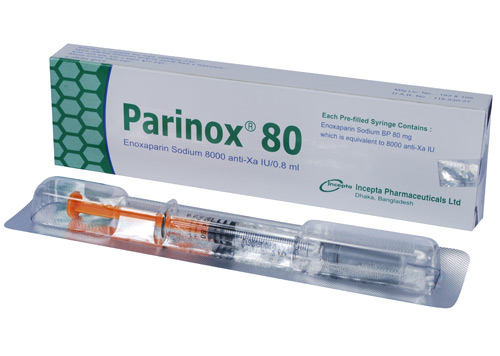

Indications - Enoxaparin is indicated in: Treatment of deep vein thrombosis, with or without pulmonary embolism. Treatment of unstable angina and non-Q-wave myocardial infarction, administered concurrently with aspirin. Prevention of thrombus formation in the extra-corporal circulation during haemodialysis. Prophylaxis of venous thromboembolic disease (prevention of blood clot formation in the veins), in particular those which may be associated with orthopedic or general surgery. Prophylaxis of venous thromboembolic disease in medical patients bedridden due to acute illness, including cardiac insufficiency, respiratory failure, severe infections, rheumatic diseases.
Dosage & Administration - Treatment of deep vein thrombosis, with or without pulmonary embolism: Subcutaneously 100 anti-Xa lU/kg twice daily for 10 days or Subcutaneously 150 anti-Xa lU/kq once daily for 10 days. Oral anticoagulant therapy should be initiated when appropriate and Enoxaparin Sodium treatment should be continued until a therapeutic anticoaqulant effect has been achieved. Treatment of unstable angina and non-Q-wave myocardial infarction, administered concurrently with aspirin: Subcutaneously 100 anti-Xa lU/kg twice daily for 2- 8 days. Should be administered concurrently with oral aspirin (100 to 325 mg once daily). Treatment with Enoxaparin Sodium in these patients should be prescribed fora minimum of 2 days and continued until clinical stabilization. Prevention of thrombus formation in extra corporeal circulation during hemodialysis: Recommended dose is 100 anti-Xa lU/kg. For patients with a high risk of hemorrhage, the dose should be reduced to 50 anti-Xa lU/kg for double vascular access or 75 anti-Xa lU/kg for single vascular access. During hemodialysis, Enoxaparin Sodium should be introduced into the arterial line of the circuit at the beqinninq of the dialysis session. Prophylaxis of venous thromboembolic disease in surgical patients: Patients undergoing general surgery with a moderate risk of thromboembolism (e.g. abdominal surgery): Subcutaneously 2000 anti-Xa IU (0.2 ml) or 4000 anti-Xa IU (0.4 ml) once daily for 7 to 10 days. The first injection should be given 2 hours before the surgical procedure. Patients undergoing orthopedic surgery with a high risk of thromboembolism: Subcutaneously 4000 anti-Xa IU (0.4 ml) once daily for 7 to 10 days. The first injection should be given 12 hours before the surgical procedure. Longer treatment duration may be appropriate in some patients like continued therapy with 4000 anti-Xa IU once daily for 3 weeks following the initial therapy has been proven to be beneficial in orthopaedic surqery. Prophylaxis of venous thromboembolic disease in medical patients: Subcutaneously 4000 anti-Xa IU (0.4 ml) once daily for 6- 14 days
Side Effects - Haemorrhage (bleeding), Thrombocytopenia, elevations of serum aminotransferase. Pain, bluish marks at injection sites to skin rash at injection sites. Cases of neuraxial hematomas with the concurrent use of Enoxaparin and spinal/epidural anesthesia or spinal puncture have resulted in varying degrees of neurologic injuries.
Contraindications - Patients with known hypersensitivity to Enoxaparin Sodium, heparin or other low molecular weight heparins. Patients with active major bleeding and conditions with a high risk of uncontrolled hemorrhage including recent hemorrhagic stroke.
Others - Pregnancy & Lactation Pregnancy category B. In humans, there is no evidence that Enoxaparin Sodium crosses the placental barrier. As there are no adequate and well-controlled studies in pregnant women, Enoxaparin Sodium should be used during pregnancy only if clearly needed. Pregnant women with mechanical prosthetic heart valves may be at a higher risk for thromboembolism. It is not known whether Enoxaparin is excreted in human milk. Because many drugs are excreted in human milk and because of the potential for serious adverse reactions in nursing infants, a decision should be made whether to discontinue nursing or discontinue Enoxaparin, taking into account the importance of Enoxaparin to the mother and the known benefits of nursing. Precautions & Warnings Enoxaparin Sodium should be injected by deep subcutaneous route in prophylactic and curative treatment and by intravascular route during hemodialysis. Do not administer by the intramuscular route. Enoxaparin Sodium should be used with caution in conditions with increased potential for bleeding, such as impaired hemostasis, history of peptic ulcer, recent ischemic stroke, uncontrolled severe arterial hypertension, diabetic retinopathy and recent neuro- or ophthalmologic surgery, concomitant use of medications affecting hemostasis. It is recommended that the platelet counts be measured before the initiation of the treatment and regularly thereafter during treatment. Use in Special Populations Dose in Elderly Patients: No dosage adjustment is necessary, unless kidney function is impaired. Dose in Renal Impairment: Although no dosage adjustment is recommended in patients with moderate (creatinine clearance: 30-50 ml/min) and mild (creatinine clearance: 50 80 ml/min) renal impairment, all such patients should be observed carefully for signs and symptoms of bleeding. For patients with severe (creatinine clearance <30 ml/min) renal impairment, following dosage adjustments are recommended: Prophylactic dose ranges: 2000 antiXa IU once daily; Therapeutic dose ranges: 100 anti-Xa lU/kg once daily. Dose in Hepatic Impairment: Caution should be used in hepatically impaired patients. Overdose Effects Accidental overdosage following administration of Enoxaparin may lead to hemorrhagic complications. Injected Enoxaparin may be largely neutralized by the slow i.v. injection of protamine sulfate (1% solution) The dose of protamine sulfate should be equal to the dose of Enoxaparin injected: 1 mg protamine sulfate should be administered to neutralize 1 mg Enoxaparin.
.jpeg "Picture of Cleven 60 SC Injection")
Cleven 60 SC Injection
- Brand Name - Cleven 60 SC Injection
- Generic Name - Enoxaparin Sodium
- Doges From - Injection
- Strength - 6000 Anti-Xa IU/0.6 ml
- Pack Size - 1s
- Manufacture - Beximco Pharmaceuticals Ltd
Customers who bought this item also bought