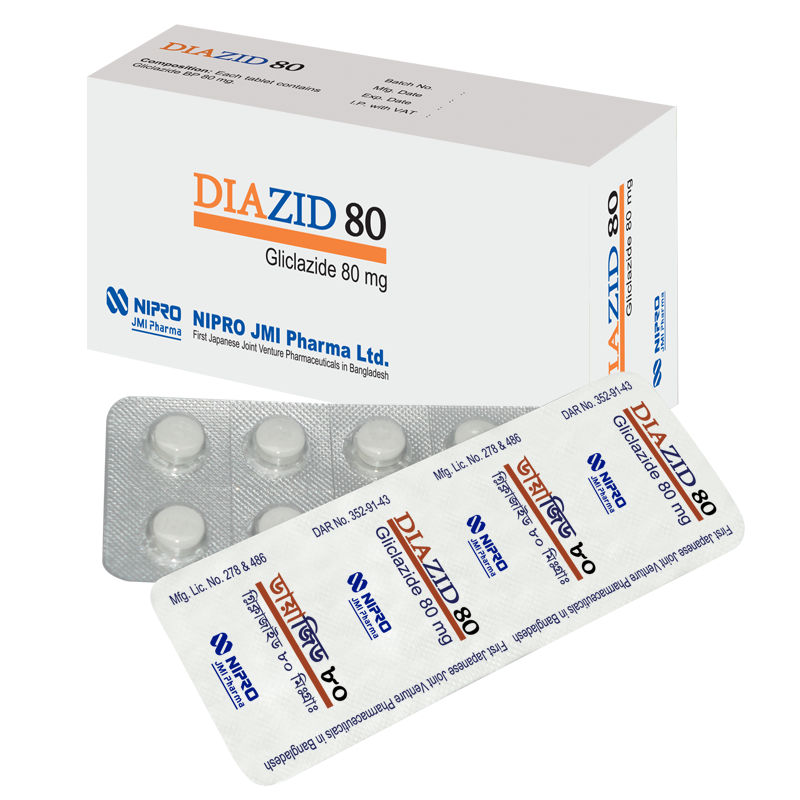
Indications - Gliclazide is indicated for the treatment of maturity onset diabetes mellitus (NIDDM) patients who require oral hypo-glycaemic drug.
Dosage & Administration - Film coated tablet: The usual initial dose is 40 to 80 mg daily. The dose can be increased upto 320 mg daily in divided doses when needed. The drug should be taken before meal. For children Gliclazide is not used because it is contraindicated in juvenile-onset diabetes. Modified release preparation: The usual daily dosage for Gliclazide 30 mg is 1 to 4 tablets & Gliclazide 60 mg is 1 to 2 tablets per day as a single dose. It is recommended that the drug should be taken at breakfast time. It is preferable to take this drug before breakfast in order to avoid or to minimize the possible onset of digestive disorders.
Side Effects - There may be hypoglycaemia in concurrent conditions such as hepatic and renal disease, malnutrition, alcohol intoxication. Sometimes headache, gastrointestinal upsets, nausea, dizziness, skin reactions including rash, pruritus, erythema may occur.
Contraindications - Gliclazide should not be used in - Juvenile-onset (type-1) diabetes Diabetes associated with Ketosis Diabetic patients undergoing surgery, after severe injury or during infection Patients having hypersensitivity for sulfonylurea group of drugs Pregnant women and breast-feeding mother Hepatic insufficiency
Others - Pregnancy & Lactation Gliclazide is contraindicated in pregnant women. It should not be used in breast feeding mother. Precautions & Warnings Gliclazide should be used carefully in patients with hepatic impairment. If there is definite hepatic disease then gliclazide should not be used. Gliclazide can be used safely in patients with renal insufficiency as it is extensively metabolized. Gliclazide has less sudden hypoglycaemic episode than other sulfonylurea group of drugs. Overdose Effects In accidental overdose, at first gastric lavage should be done and at the same time the hypoglycaemia should be corrected. In severe cases IV infusion of 5% glucose should be started immediately with frequent monitoring of blood glucose and potassium level. Storage Conditions Store in a cool and dry place, below 30°C and away from light.
.jpeg "Picture of Tablet Comprid XR 60mg")
Tablet Comprid XR 60mg
- Brand Name - Comprid XR 60 tablet
- Generic Name - Gliclazide
- Doges From - Tablet
- Strength - 60 mg
- Pack Size - 30s
- Manufacture - Square Pharmaceutical Ltd.
Customers who bought this item also bought