

Indications - Mycophenolate Mofetil or Mycophenolic acid is indicated for the prophylaxis of organ rejection in patients receiving allogeneicrenal, cardiac or hepatic transplants. This should be used concomitantly with cyclosporine and corticosteroids.
Dosage & Administration - Renal Transplantation: Adults: A dose of 1 gm administered orally or intravenously (over NO LESS THAN 2 HOURS) twice a day (daily dose of 2 gm) is recommended for use in renal transplant patients. Although a dose of 1.5 g administered twice daily (daily dose of 3 gm) was used in clinical trials and was shown to be safe and effective, no efficacy advantage could be established for renal transplant patients. Patients receiving 2 gm/day of Mycophenolate demonstrated an overall better safety profile than did patients receiving 3 gm/day of Mycophenolate . Pediatrics (3 Months To 18 Years Of Age): The recommended dose of Mycophenolate oral suspension is 600 mg/m2 administered twice daily (up to a maximum daily dose of 2 gm/10 ml oral suspension). Patients with a body surface area of 1.25 m2 to 1.5 m2 may be dosed with Mycophenolate capsules at a dose of 750 mg twice daily (1.5 g daily dose). Patients with a body surface area >1.5 m2 may be dosed with Mycophenolate capsules or tablets at a dose of 1 gm twice daily (2 gm daily dose). Cardiac Transplantation: A dose of 1.5 g bid administered intravenously (over NO LESS THAN 2 HOURS) or 1.5 g bid oral (daily dose of 3 gm) is recommended for use in adult cardiac transplantpatients. Hepatic Transplantation: A dose of 1 gm bid administered intravenously (over NO LESS THAN 2 HOURS) or 1.5 g bid oral (daily dose of 3 gm) is recommended for use in adult hepatic transplantpatients.
Side Effects - Diarrhoea, vomiting, GI haemorrhage and perforation; leucopenia; asthenia, pain, headache, anaemia, thrombocytopenia, renal tubular necrosis, haematuria, BP changes, hyperglycaemia, disturbances of electrolytes and blood lipids, peripheral oedema, dyspnoea, cough, acne, rash, alopecia, dizziness, insomnia, paraesthesia, tremor, hypersensitivity reactions, pancreatitis, hepatitis.
Contraindications - Pregnancy, lactation. Rare hereditary deficiency of hypoxanthine-guanine phosphoribosyltransferase (HGPRT), including Kelley-Seegmiller or Lesch-Nyhan syndrome.
Others - Pregnancy & Lactation Pregnancy Category D. There is positive evidence of human foetal risk, but the benefits from use in pregnant women may be acceptable despite the risk (e.g., if the drug is needed in a life-threatening situation or for a serious disease for which safer drugs cannot be used or are ineffective).
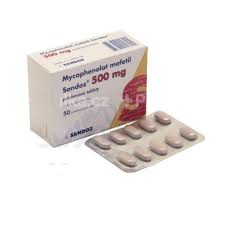
Mycophenolat-Mofetil 500mg Tablet
- Brand Name - Mycophenolat-Mofetil 500mg Tablet
- Generic Name - Mycophenolate Mofetil
- Doges From - Tablet
- Strength - 500 mg
- Pack Size - 50s
- Manufacture - SANDOZ (A Novartis Division)
Customers who bought this item also bought

