

Indications - Calcitriol is indicated in- Post-menopausal osteoporosis Renal osteodystrophy Postsurgical hypoparathyroidism Idiopathic hypoparathyroidism Pseudohypoparathyroidism Secondary hyperparathyroidism in patients with moderate to severe chronic renal failure (pre-dialysis) Vitamin D dependent rickets
Dosage & Administration - The optimal daily dose of Calcitriol capsule must be carefully determined for each patient on the basis of serum calcium level. In Post-menopausal Osteoporosis: The recommended dose of Calcitriol capsule is 0.25 mcg twice daily. In Renal Osteodystrophy (dialysis patients): The initial daily dose is 0.25 mcg of Calcitriol capsule. In patients with normal or only slightly reduced calcium levels, doses of 0.25 mcg every other day are sufficient. In Hypoparathyroidism and Rickets: The recommended initial dosage of Calcitriol capsule is 0.25 mcg/day which given in the morning. If within 2-4 weeks satisfactory response is not observed by usual dose then dose may be increased at 2-4 weeks intervals. The recommended intravenous initial dose of Calcitriol injection, depending on the severity of the hypocalcemia and/or secondary hyperparathyroidism, is 1 mcg (0.02 mcg/kg) to 2 mcg administered three times weekly, approximately every other day. Doses as small as 0.5 mcg and as large as 4 mcg three times weekly have been used as an initial dose. If a satisfactory response is not observed, the dose may be increased by 0.5 to 1 mcg at two to four week intervals.
Side Effects - Occasional symptoms include anorexia, headache, vomiting and constipation. Chronic effects may include dystrophy, fever, polyuria, dehydration, apathy and urinary tract infection
Contraindications - Calcitriol is contraindicated in patients with known hypersensitivity to any of its ingredients. Calcitriol is also contraindicated in all diseases associated with hypercalcemia.
Others - Pregnancy & Lactation There is no evidence that vitamin D is teratogenic in humans. Calcitriol may be used during pregnancy only if the benefits outweigh the potential risk to the fetus. Mothers may breast feed while taking Calcitriol but serum calcium levels of the mother and infant should be monitored.
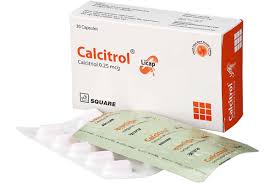
Capsule Calcitrol 0.25mcg
- Brand Name - Calcitrol Capsule
- Generic Name - Calcitriol
- Doges From - Capsule
- Strength - 0.25 mcg
- Pack Size - 30s
- Manufacture - Square Pharmaceutical Ltd.
Customers who bought this item also bought


