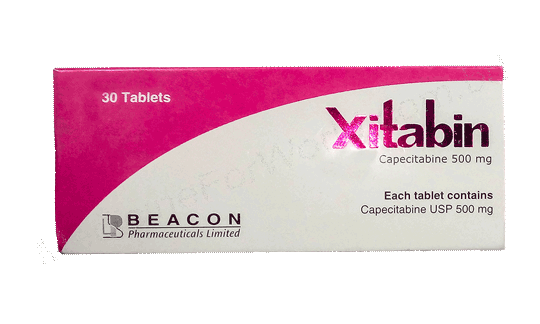

Indications - Colorectal Cancer: Capecitabine is indicated as a single agent for adjuvant treatment in patients with Dukes' C colon cancer who have undergone complete resection of the primary tumor when treatment with fluoropyrimidine therapy alone is preferred. It is indicated as first-line treatment of patients with metastatic colorectal carcinoma when treatment with fluoropyrimidine therapy alone is preferred. Breast Cancer: Capecitabine in combination with docetaxel is indicated for the treatment of patients with metastatic breast cancer after failure of prior anthracycline-containing chemotherapy. Monotherapy is also indicated for the treatment of patients with metastatic breast cancer resistant to both paclitaxel and an anthracycline-containing chemotherapy regimen or resistant to paclitaxel and for whom further anthracycline therapy is not indicated. Pancreatic Cancer: Capecitabine is indicated for the first line treatment of patients with locally advanced and metastatic pancreatic cancer in combination with gemcitabine. Oesophagogastric Cancer: Capecitabine is indicated for the first line treatment of patients with advanced oesophagogastric cancer.
Dosage & Administration - In case of stage-III colon cancer and locally advanced or metastatic breast cancer: 1.25 gm/m2 twice daily for 14 days, followed by a 7-day interval, given as 3-week cycles for a total 8 cycles . For metastatic colorectal cancer, in combination therapy it is administered as 0.8-1 gm/m2 twice daily for 14 days repeated after 7 days interval
Side Effects - myocardial infarction, angina; hand-foot syndrome (numbness, tingling, pain, redness, or blistering of the palms of the hands and soles of the feet). This can lead to the disappearance of fingerprints in some patients; diarrhea (sometimes severe), nausea, stomatitis; neutropenia, anemia, thrombocytopenia; Hyperbilirubinemia
Contraindications - Capecitabine is contraindicated in patients with known dihydropy rimidine dehydrogenase (DPD) deficiency, it is also contraindicated in patients with severe renal impairment (creatinine clearance below 30 ml/min), and in patients with known hypersensitivity to Capecitabine.
Others - Pregnancy Category D. There is positive evidence of human fetal risk, but the benefits from use in pregnant women may be acceptable despite the risk (e.g., if the drug is needed in a life-threatening situation or for a serious disease for which safer drugs cannot be used or are ineffective).
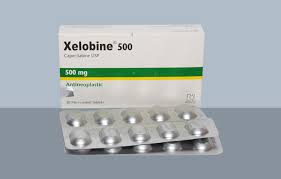
Xelobine 500mg Tablet
- Brand Name - Xelobine 500mg Tablet
- Generic Name - Capecitabine
- Doges From - Tablet
- Strength - 500 mg
- Pack Size - 30s
- Manufacture - Healthcare Pharmaceutical Limited
Customers who bought this item also bought