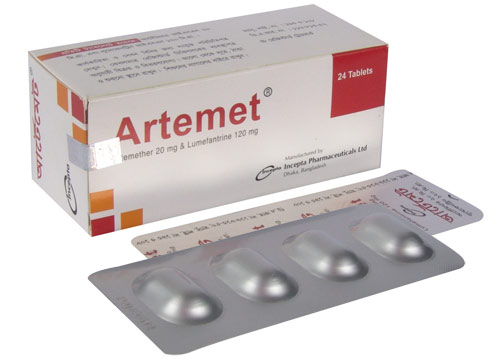

Indications - This preparation is indicated for: Treatment and stand by emergency treatment of adults, children and infants with acute, uncomplicated infection due to Plasmodium falciparum or mixed infections including P. falciparum. Because Artemether and Lumefantrine is effective against both drug sensitive and drug resistance P. falciparum. This preparation is also recommended for malaria infections acquired in areas where the parasites may be resistant to other antimalarials. Stand by emergency treatment: Most tourists and business travelers, considered to be non-immune, will be able to obtain prompt medical attention if malaria is suspected. However a minority at risk of infection may be unable to obtain such care within 24 hours of onset of symptoms, particularly if they are in an isolated location far from medical services. In such case, prescribers are advised to issue Artemether and Lumefantrine to be carried by the traveler for self-administration (stand by emergency treatment). Consideration should be given to official guidance regarding the appropriate use of the anti-malarial agents.
Dosage & Administration - Patients with acute malaria are frequently averse to food. The dose should be taken with high fat food or drinks such as milk. In the event of vomiting within 1 hour of administration a repeat dose should be taken. Adults and children weighing 35 kg and above: A standard 3 days treatment schedule with a total of 6 doses is recommended dosage is 4 tablets as a single dose at the time of initial diagnosis, again 4 tablets after eight hours, and then 4 tablets twice daily (morning and evening) on each of the following two days (Total course comprises 24 tablets). 5 to <15 kg body weight: 1 tablet at the time of initial diagnosis, 1 tablet again after 8 hours and then 1 tablet twice daily (morning and evening) on each of the following two days (Total course comprises of 6 tablets). 15 to <25 kg body weight: 2 tablets as a single dose at the time of initial diagnosis , 2 tablets again after 8 hours and then 2 tablets twice daily (morning and evening) on each of the following two days (Total course comprises 12 tablets). 25 to <35 kg body weight: 3 tablets as a single dose at the time of initial diagnosis, 3 tablets again after 8 hours and then 3 tablets twice daily (morning and evening) on each of the following two days (Total courses comprises 18 tablets).
Side Effects - It is generally very well tolerated by children and adults, with most adverse effects are of mild to moderate severity and duration. Hypersensitivity, headache, dizziness, sleep disorder, somnolence, involuntary muscle contractions, paraesthesia, hypoesthesia, abnormal gait, ataxia, palpitation, cough, abdominal pain, anorexia, diarrhoea, vomiting, nausea, pruritus, rash, arthralgia, myalgia, asthenia, fatigue.
Contraindications - Hypersensitivity to any of the ingredients or excipients; Patients with severe malaria according to WHO definition; First trimester of pregnancy; Patients with a family history of congenital prolongation of the QTc interval or sudden death or with any other clinical condition known to prolong the QTc interval such as patients with a history of symptomatic cardiac arrythmias with clinically relevant bradycardia or with severe cardiac disease; Patients with known disturbance of electrolyte balance e.g. hypokalaemia or hypomagnesemia; Patients taking any drug which is metabolized by the cytochrome enzyme CYP2D6 (e.g. flecainide, metoprolol, imipramine, amitriptyline, clomipramine).
Others - Pregnancy & Lactation Use in pregnancy & lactation is contraindicated; especially in the first trimester of pregnancy. Breast feeding women should not take this preparation. Due to the long elimination half-life of Lumefantrine (4-6 days), it is recommended that breast feeding should not resume before day 28 unless potential benefits to the mother and child outweigh the risk of treatment.
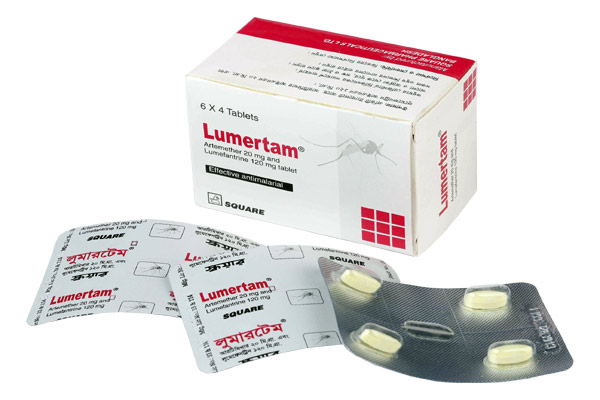
.jpg "Picture of Tablet Lumertam 20mg+120mg")
Tablet Lumertam 20mg+120mg
- Brand Name - Lumertam Tablet
- Generic Name - Artemether + Lumefantrine
- Doges From - Tablet
- Strength - 20 mg+120 mg
- Pack Size - 24s
- Manufacture - Square Pharmaceutical Ltd.
Customers who bought this item also bought