
Indications - Aspirin is indicated in the following indications- Prophylaxis against arterial occlusive events: Myocardial infarction, myocardial re-infarction, after bypass surgery, acute ischaemic stroke/TIA. Mild to moderate pain: Headache, muscle pain, dysmenorrhoea and toothache etc. Chronic disease accompanied by pain and inflammation: Osteoarthritis. Antipyretic: Cold fever and influenzae.
Dosage & Administration - Pain, inflammatory diseases and as antipyretic: Aspirin 300 mg 1-3 tablets 6 hourly with a maximum daily dose of 4 gm. Suspected acute coronary syndrome: 150 mg-300 mg immediately unless there are clear contraindications. After myocardial infarction: Aspirin 150 mg daily for 1 month. Long-term use of aspirin in a dose of 75 mg daily is recommended thereafter. Acute ischaemic stroke/Transient ischaemic stroke (TIA): The starting dose is 150 mg-300 mg daily and Aspirin 75 mg daily thereafter. Following bypass surgery: 75 mg-300 mg daily starting 6 hours post-procedure.
Side Effects - Side effects for the usual dosage of Aspirin are mild including nausea, dyspepsia, gastrointestinal ulceration and bronchospasm etc.
Contraindications - Aspirin is contraindicated to the children (Reye's syndrome) less than 12 years, in breast-feeding and active peptic ulcer. It is also contraindicated in bleeding due to haemophilia, intracranial haemorrhage and other ulceration.
Others - Pregnancy & Lactation It is especially important not to use aspirin during the last 3 months of pregnancy unless specifically directed to do so by a doctor because it may cause problems in the unborn child or complications during delivery. Aspirin penetrates into breast milk. So, it should be administered with caution to lactating mothers.
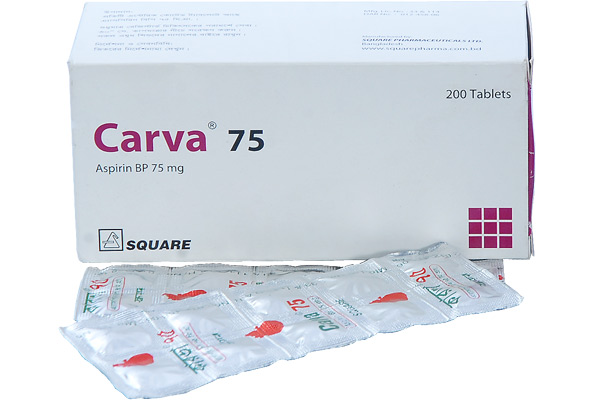
Tablet Carva 75mg
- Brand Name - Carva
- Generic Name - Aspirin
- Doges From - Tablet
- Strength - 75 mg
- Pack Size - 200s
- Manufacture - Square Pharmaceutical Ltd.
Customers who bought this item also bought