
Indications - Dysfunctions associated with hyperprolactinemia including amenorrhea with or without galactorrhea, infertility or hypogonadism. Prolactin-secreting adenomas, Acromegaly, Parkinson’s Disease
Dosage & Administration - Dosage & Administration General: It is recommended that Bromocriptine mesilate be taken with food. Patients should be evaluated frequently during dose escalation to determine the lowest dosage that produces a therapeutic response. Hyperprolactinemic Indications: The initial dosage is 1.25 mg to 2.5 mg tablet daily. An additional 2.5 mg tablet may be added to the treatment regimen as tolerated every 2-7 days until an optimal therapeutic response is achieved. Acromegaly: The initial recommended dosage is 1.25 to 2.5 mg on retiring (with food) for 3 days. An additional 1.25 to 2.5 mg should be added to the treatment regimen as tolerated every 3-7 days until patient obtains optimal therapeutic benefit. Parkinson’s Disease: The initial dose of Bromocriptine mesilate is 1.25 mg of a 2.5 mg tablet twice daily with meals. Prolactinomas: 2.5 mg to 3.75 mg daily Inhibition of lactation: 5 mg (1 tablet twice) daily with morning & evening meals for 14 day
Side Effects - The incidence of adverse effects are: nausea , headache, dizziness, fatigue, lightheadedness, vomiting, abdominal cramps, nasal congestion, constipation, diarrhea & drowsiness. A slight hypotensive effect may accompany treatment.
Contraindications - Safety & efficacy of bromocriptine mesilate have not been established in patients with renal or hepatic disease. Care should be exercised when administering Bromocriptine therapy concomitantly with other medications known to lower blood pressure.
Others - Use in Pregnancy & Lactation Pregnancy Category B. Nursing Mothers: Bromocriptine should not be used during lactation in postpartum women.
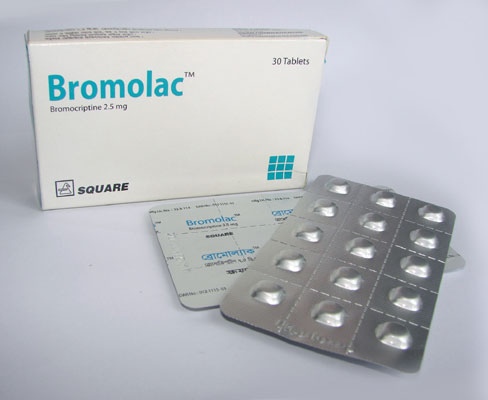
Tablet Bromolac 2.5mg
- Brand Name - Bromolac Tablet
- Generic Name - Bromocriptine Mesylate
- Doges From - Tablet
- Strength - 2.5 mg
- Pack Size - 30s
- Manufacture - Square Pharmaceutical Ltd.
Customers who bought this item also bought