Indications - This combination is indicated for treatment of the signs and symptoms of osteoarthritis or rheumatoid arthritis in patients at high risk of developing NSAID-induced gastric and duodenal ulcers and their complications.
Dosage & Administration - Osteoarthritis: The recommended dosage for maximal GI mucosal protection is Diclofenac Sodium 50 mg & Misoprostol 200 µg tid. For patients who experience intolerance, Diclofenac Sodium 75 mg & Misoprostol 200 µg bid or Diclofenac Sodium 50 mg p& Misoprostol 200 µg bid can be used. Rheumatoid arthritis: The recommended dosage is Diclofenac Sodium 50 mg & Misoprostol 200 µg tid or qid. For patients who experience intolerance, Diclofenac Sodium 75 mg & Misoprostol 200 µg bid or Diclofenac Sodium 50 mg & Misoprostol 200 µg bid can be used.
Side Effects - The most common reported side effects are abdominal pain, diarrhea and other GI symptoms. Diarrhea and abdominal pain developed early in the course of therapy and were usually self-limited (resolved after 2 to 7 days). Rare instances of profound diarrhea leading to severe dehydration have been reported in patients receiving Misoprostol.
Contraindications - This is contraindicated in patients with hypersensitivity to Diclofenac, Misoprostol or to other prostaglandins. This should not be given to patients who have experienced asthma, urticaria or other allergic-type reactions after taking aspirin or other NSAIDs. This is also contraindicated in pregnant women because of the abortifacient property of Misoprostol.
Others - Pregnancy & Lactation Lactation: Diclofenac Sodium has been found in the milk of nursing mothers. It is unlikely that Misoprostol is excreted into milk since the drug is rapidly metabolized throughout the body. Excretion of the active metabolite (Misoprostol acid) into milk is possible, but has not been studied. Because of the potential for serious adverse reactions in nursing infants, Diclofenac Sodium and Misoprostol combination is not recommended for use by nursing mothers.
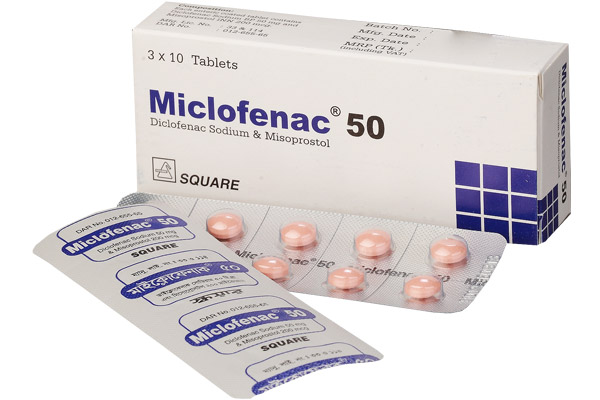
Miclofenac 50
- Brand Name - Miclofenac 50 Tablet
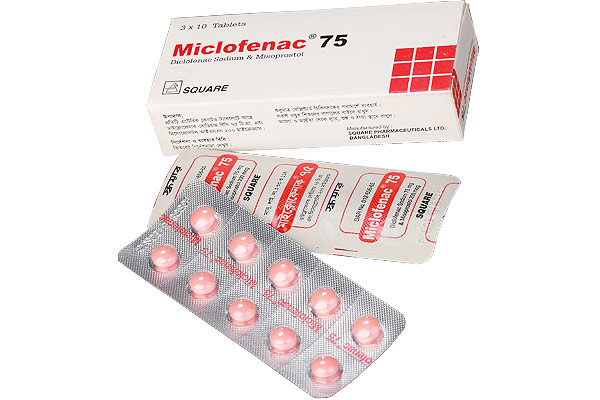
- Generic Name - Diclofenac Sodium + Misoprostol
- Doges From - Tablet
- Strength - 50 mg+200 mcg
- Pack Size - 30s
- Manufacture - Square Pharmaceutical Ltd.
Customers who bought this item also bought