
Indications - Fluoxetine is indicated in- Depressive illness Bulimia nervosa and anorexia nervosa Obsessive compulsive disorders Pre-menstrual syndrome
Dosage & Administration - Initial treatment: Recent studies suggest that 20 mg/day of Fluoxetine may be sufficient to obtain satisfactory antidepressant response. Consequently, a dose of 20 mg/day administered in the morning is recommended as the initial dose. A dose increase may be considered after several weeks if no clinical improvement is observed. Dosage above 20 mg/day, should be administered on a bid schedule (i.e. morning and noon) and should not exceed a maximum dose of 80 mg/day. As with other antidepressants, the full antidepressant effect may be delayed until 4 weeks of treatment or longer. As with many other medications, a lower or less frequent dosage should be used in patients with renal and/or hepatic impairment. A lower or less frequent dosage should also be considered for patients, such as elderly, with concurrent disease or on multiple medication. A recommended maximum dose for elderly patients is 60 mg per day. Maintenance treatment: It is generally agreed among expert psychopharmacologists that acute episode of depression requires several months or longer sustained pharmacologic therapy. Fluoxetine is also used in dosage of 60 mg daily for the management of bulimia nervosa.
Side Effects - Gastrointestinal: Nausea, vomiting, dyspepsia, dry mouth, and diarrhoea. Neurological: Anxiety, nervousness, insomnia/ drowsiness and fatigue. Others: Excessive sweating, pruritus, skin rashes associated with liver, kidney and lung involvement. It has therefore been advised that Fluoxetine therapy should be discontinued in any patient who develops a skin rash.
Contraindications - Fluoxetine Hydrochloride is contraindicated in patients known to be hypersensitive to it. Monoamine oxidase inhibitors: There have been reports of serious, sometimes fatal reactions (including hyperthermia, rigidity, myoclonus, autonomic instability with possible rapid fluctuations of vital signs and changes of mental status that include extreme agitation progressing to delirium and coma) in patients receiving Fluoxetine in combination with monoamine oxidase inhibitors (MAOIs), and in patients who have recently discontinued Fluoxetine and are then started on MAOIs. Some cases presented with features resembling neuroleptic malignant syndrome. Therefore, Fluoxetine should not be used in combination with MAOI, or within 14 days of discontinuing therapy with MAOI. Since Fluoxetine and its major metabolites have very long elimination half-lives, at least 5 weeks should be allowed after stopping Fluoxetine and before starting MAOI.
Others - Pregnancy & Lactation Pregnancy: In animal studies, no teratogenicity or harmful effect was found. Because animal reproductive studies are not always predictive of human responses, Fluoxetine should be used in pregnancy only if clearly needed. Lactation: As Fluoxetine is excreted in human milk, caution should be exercised when Fluoxetine is administered to nursing women.
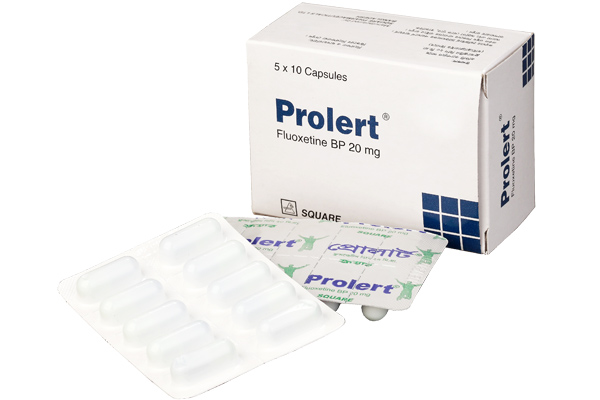
Capsule Prolert 20 mg
- Brand Name - Prolert
- Generic Name - Fluoxetine Hydrochloride
- Doges From - Capsule
- Strength - 20 mg
- Pack Size - 50s
- Manufacture - Square Pharmaceutical Ltd.
Customers who bought this item also bought