Indications - Itraconazole is indicated in- Tinea corporis, Tinea cruris, Tinea pedis, Tinea manus, Vulvovaginal candidiasis, Fungal keratitis, Pityriasis versicolor, Oropharyngeal candidiasis, Onychomycosis, Histoplasmosis, Systemic Infections: (Aspergillosis, Candidiasis and Cryptococcus when other drugs are effective) Antifungal prophylaxis: To prevent systemic fungal infection in severely neutropenic patients.
Dosage & Administration - Tinea corporis, Tinea cruris: 100 mg daily for 2 weeks. Tinea pedis, Tinea manus: 100 mg daily for 4 weeks. Vulvovaginal candidiasis: 200 mg twice daily for 1 day or 200 mg daily for 3 days. Fungal keratitis: 200 mg daily for 3 weeks. Pityriasis versicolor: 200 mg daily for 1 week. Oropharyngeal candidiasis: 100 mg daily (200 mg for AIDS patients) for 15 days. Onychomycosis: 200 mg daily for 3 months; or 200 mg twice daily for 7 days (course), subsequent courses repeated after 21 day interval; fingernails 2 courses and toenails 3 courses. Histoplasmosis: 200 mg 1-2 times daily. Systemic Infections: (Aspergillosis, Candidiasis and Cryptococcus when other drugs are effective) 200 mg once daily, increased in invasive or in cryptococcal meningitis to 200 mg twice daily. Antifungal prophylaxis: To prevent systemic fungal infection in severely neutropenic patients: 100mg daily. Or as directed by the physician.
Side Effects - Nausea, abdominal pain, dyspepsia, constipation, headache, dizziness, raised liver enzymes, hepatitis, cholestatic jaundice, peripheral neuropathy have been reported.
Contraindications - The drug is contraindicated in patients with a known history of hypersensitivity to it. The drug is also contraindicated in pregnant women and patients with known severe hepatic disease. It is also contraindicated with Rifampicin therapy.
Others - Pregnancy & Lactation Not recommended during pregnancy & lactation, unless otherwise indicated by the physician.
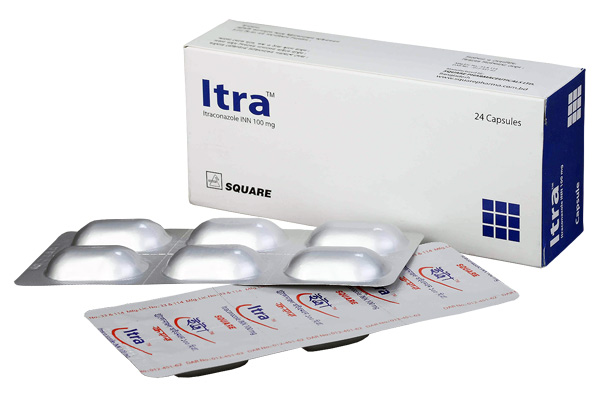
Capsule Itra 100 mg
- Brand Name - Itra Capsule
- Generic Name - Itraconazole
- Doges From - Capsule
- Strength - 100 mg
- Pack Size - 24s
- Manufacture - Square Pharmaceutical Ltd.
Customers who bought this item also bought