
Indications - The indications of ketoprofen are based on its anti-inflammatory, analgesic and antipyretic properties. Ketoprofen is indicated for symptomatic treatment of: Rheumatoid arthritis Degenerative joint diseases Musculoskeletal and joint disorders such as tendinitis, sprain Pain, regardless of the origin, such as dental pain, headache and primary dysmenorrhea.
Dosage & Administration - Dosage Anti-inflammatory dosage: The recommended starting dose is 150 to 300 mg/day in 3 divided doses. Once the maintenance dosage has been established (usually 100 to 200 mg/day), the patient may be tried on a twice daily dose regimen. Alternatively, switching to the once daily form at the same dosage may be considered. The recommended maximum daily dose is 300 mg. Management of pain and primary dysmenorrhea: The usual recommended dose is 25 to 50 mg, every 6 to 8 hours as necessary. The total daily dose should not exceed 300 mg. Administration The oral forms should be taken with fluids, preferably with food.
Side Effects - Blood and lymphatic system disorders- Rare: haemorrhagic anaemia; Unknown: agranulocytosis, thrombocytopenia, bone marrow failure, hemolytic anemia, leucopenia Immune system disorders- Unknown: anaphylactic reactions (including shock) Psychiatric disorders; Unknown: depression, hallucinations, confusion, mood altered Nervous system disorders- Uncommon: headache, dizziness, somnolence, Rare: paraesthesia; Unknown: aseptic meningitis, convulsions, dysgeusia, vertigo Eye disorders- Rare: vision blurred Ear and labyrinth disorders- Rare: tinnitus Cardiac disorders- Unknown: exacerbation of heart failure, atrial fibrillation Vascular disorders- Unknown: hypertension, vasodilatation, vasculitis (including leukocytoclastic vasculitis) Respiratory, thoracic and mediastinal disorders- Rare: asthma; Unknown: bronchospasm (particularly in patients with known hypersensitivity to ASA and other NSAIDs) Gastrointestinal disorders- Common: dyspepsia, nausea, abdominal pain, vomiting; Uncommon: constipation, diarrhoea, flatulence, gastritis; Rare: stomatitis, peptic ulcer; Unknown: exacerbation of colitis and Crohn’s disease, gastrointestinal haemorrhage and perforation, pancreatitis Hepatobiliary disorders- Rare: hepatitis, transaminases increased Skin and subcutaneous disorders- Uncommon: rash, pruritis; Unknown: photosensitivity reaction, alopecia, urticaria, angioedema, bullous eruption including Stevens-Johnson syndrome, toxic epidermal necrolysis, acute generalized exanthematous pustulosis Renal and urinary disorders- Unknown: renal failure acute, tubulointerstitial nephritis, nephritic syndrome, renal function tests abnormal General disorders and administration site conditions- Uncommon: oedema Metabolism and nutritional disorders; Unknown: hyponatremia, hyperkalemia Investigations; Rare: weight increased.
Contraindications - Ketoprofen is contraindicated in patients who have a history of hypersensitivity reactions such as asthmatic attacks or other allergic-type reactions to ketoprofen, ASA or other NSAIDs. Severe, rarely fatal, anaphylactic reactions have been reported in such patients. Ketoprofen is also contraindicated in the following cases: Severe heart failure Active or history of peptic ulcer/hemorrhage History of gastrointestinal bleeding or perforation, related to previous NSAIDs therapy Severe hepatic insufficiency Severe renal insufficiency Third trimester of pregnancy Rectitis or history of proctorrhagia (rectal administration)
Others - Pregnancy & Lactation During the first and second trimester: As the safety of ketoprofen in pregnant women has not been evaluated, the use of Ketoprofen during the first and second trimester of pregnancy should be avoided. During the third trimester of pregnancy: Prodenid is contraindicated during the last trimester of pregnancy. Ketoprofen is not recommended in nursing mothers.
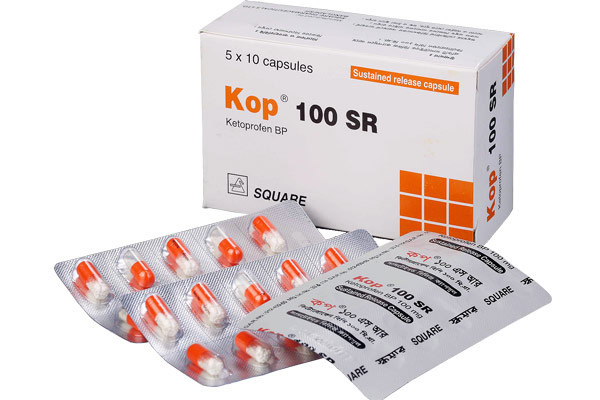
Capsule Kop SR 100mg
- Brand Name - Kop SR
- Generic Name - Ketoprofen
- Doges From - Capsule
- Strength - 100 mg
- Pack Size - 50s
- Manufacture - Square Pharmaceutical Ltd.
Customers who bought this item also bought