Indications - Constipation (Chronic Constipation): In every case of chronic constipation, initial treatment should consist of a diet rich in fiber (vegetables, salads, fruits etc.) a generous amount of liquids and much physical exercise. Lactulose is only to be taken when these measures prove insufficient. Intestinal flora disturbances: In damaged to intestinal flora (e.g. following long-term antibiotic treatment) gall bladder diseases intestinal diseases ( Colitis, Diverticulosis, Megacolon) Increased blood ammonia levels (hyper ammoniemia in hepatopathy, portal-systemic encephalopathy)
Dosage & Administration - In constipation ( chronic constipation): Adults: Initially 3-6 tea-spoons daily, In long-term therapy 1½-6 tea-spoons daily Children up to 14 years: Initially 3 tea-spoons daily, In long-term therapy 1-2 tea-spoons daily Infants and toddlers: Initially 1-2 tea-spoons daily, In long-term therapy 1 tea-spoon daily In damaged intestinal flora: Adults: 1-2 tea-spoons daily Children: 1 tea-spoon daily For reduction of blood ammonia level: Hyper-ammoniemia in hepatopathy: a maximum of 18-30 tea-spoons daily. In portal systemic encephalopathy: hourly doses of 6-9 tea-spoons of Lactulose solution may be used to induce the rapid laxation. When the laxative effect has been achieved, the dose may then be reduced.
Side Effects - Occasionally flatulence, cramp and abdominal discomfort can occur at the beginning of treatment; this is rapidly eliminated by reducing the dose. Overdose can result in diarrhoea. In abuse, loss of electrolytes (primarily potassium).
Contraindications - Hypersensitivity to either galactose and or lactose; galactose-free diet, gastro-cardial symptom complex, suspected intestinal obstruction.
Others - Pregnancy & Lactation US FDA Pregnancy Category of Lactulose is B. Studies show that Lactulose has no adverse effects. Decisions regarding use during pregnancy and lactation must be made by registered physician.
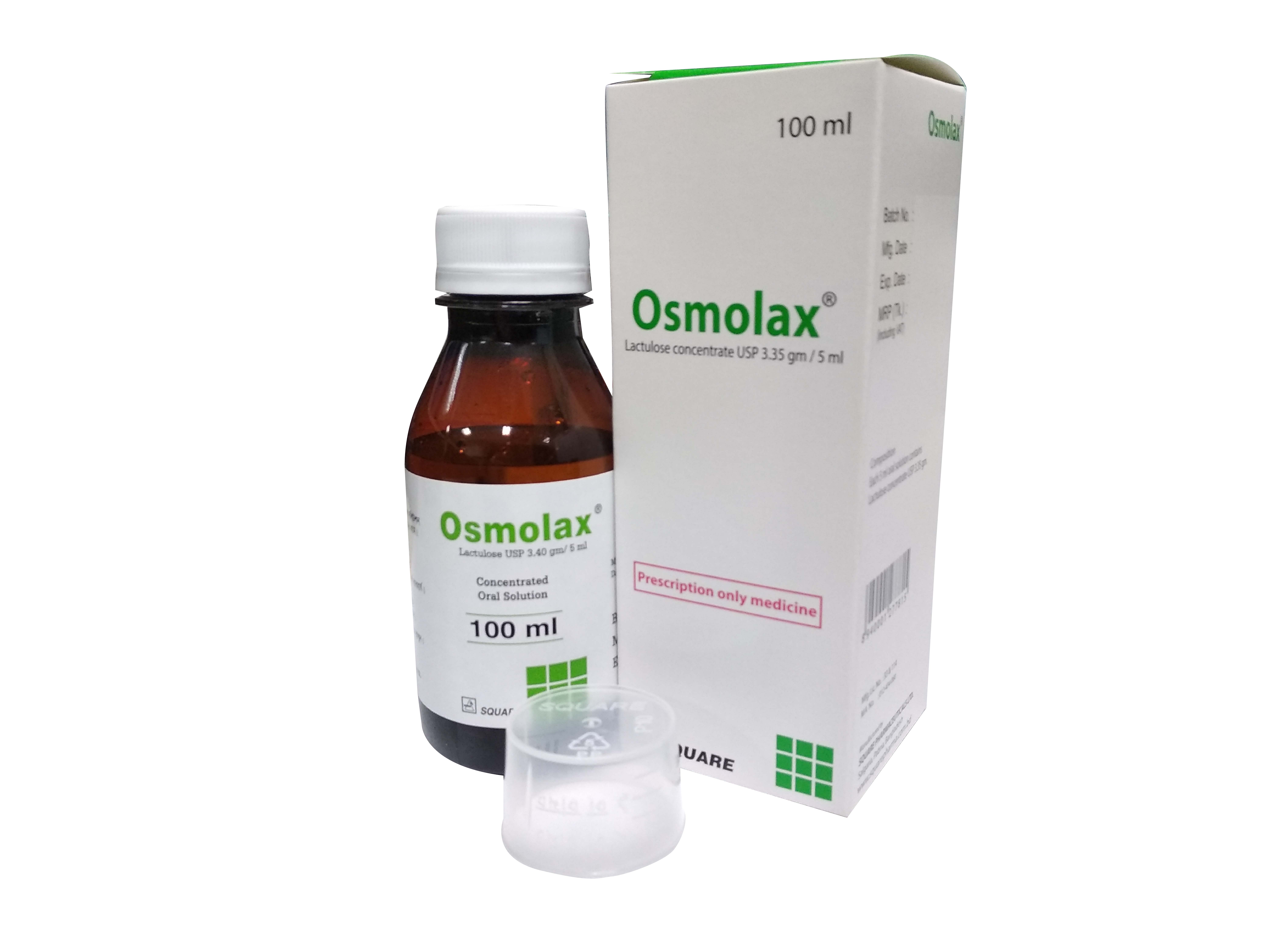
Osmolax Solution 100 ml
- Brand Name - Osmolax Solution 100 ml
- Generic Name - Lactulose
- Doges From - Oral Solution
- Strength - 3.35 gm/5 ml
- Pack Size - 1s
- Manufacture - Square Pharmaceutical Ltd.
Customers who bought this item also bought