
Indications - Naproxen & Esomeprazole is indicated for the relief of signs & symptoms of- Osteoarthritis Rheumatoid arthritis Ankylosing spondylitis & To decrease the risk of developing gastric ulcers in patients at risk of developing NSAID-associated gastric ulcers.
Dosage & Administration - Dosage Carefully consider the potential benefits & risks of this tablet & other treatment options before deciding to use this tablet. Use the lowest effective dose for the shortest duration consistent with individual patient treatment goals. If a dose of Esomeprazole lower than a total daily dose of 40 mg is more appropriate, a different treatment should be considered. Rheumatoid Arthritis, Osteoarthritis and Ankylosing Spondylitis- Adults: One tablet twice daily of either: 375 mg naproxen/20 mg of esomeprazole; or 500 mg naproxen/20 mg of esomeprazole Juvenile Idiopathic Arthritis in Adolescent Patients 12 Years of Age & Older- Weight greater than 50 kg: 375 mg naproxen/20 mg of esomeprazole; or 500 mg naproxen/20 mg of esomeprazole Weight 38 kg to less than 50 kg: One tablet twice daily of 375 mg naproxen/20 mg of esomeprazole. Administration Do not split, chew, crush or dissolve the tablet. This tablet is to be taken at least 30 minutes before meals.
Side Effects - In general, this preparation is well tolerated. The most common adverse reactions in clinical trials (>5%): erosive gastritis, dyspepsia, gastritis, diarrhea, gastric ulcer, upper abdominal pain, nausea etc.
Contraindications - Known hypersensitivity to any component of this tablet or substituted benzimidazoles. History of asthmay urticaria or other allergic-type reactions after taking aspirin or other NSAIDs. Use during the peri-operative period in the setting of coronary artery bypass graft (CABG) surgery.
Others - Pregnancy & Lactation Pregnancy category C. In late pregnancy, it should be avoided because it may cause premature closure of the ductus arteriosus. This tablet should not be used in nursing mothers due to the Naproxen component.
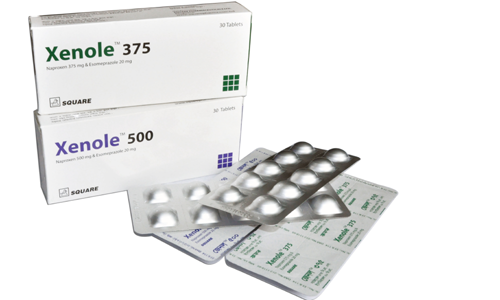
Xenole 500 mg+20 mg
- Brand Name - Xenole 500
- Generic Name - Naproxen Sodium + Esomeprazole Magnesium
- Doges From - Tablet
- Strength - 500 mg+20 mg
- Pack Size - 30s
- Manufacture - Square Pharmaceutical Ltd.
Customers who bought this item also bought